Sarah Lawrence College

About SLC

SLC100: Timely Education. Timeless Values.

For 100 years, Sarah Lawrence has empowered curious and creative lifelong learners – people who question deeply, imagine boldly, and act with purpose. As we celebrate a century of this transformative education, we honor the timeless values that make us who we are while responding nimbly to the timely opportunities and challenges of a rapidly changing world. Our foundation is strong, our mission endures, and our second century begins with boundless possibility.

Sarah Lawrence College Through the Years

1920s

Founding the College

1930s

Establishing a Pedagogy

1940s

The College During Wartime

1950s

Graduate Programs and McCarthyism

1960s

Coeducation and Continuing Education

1970s

Growing the Campus—Curriculum and Grounds

1980s

The Ilchman Years

1990s

Building the Science and Sports Centers

2000s

Finding a Home for the Visual Arts

2010s

Moving Forward

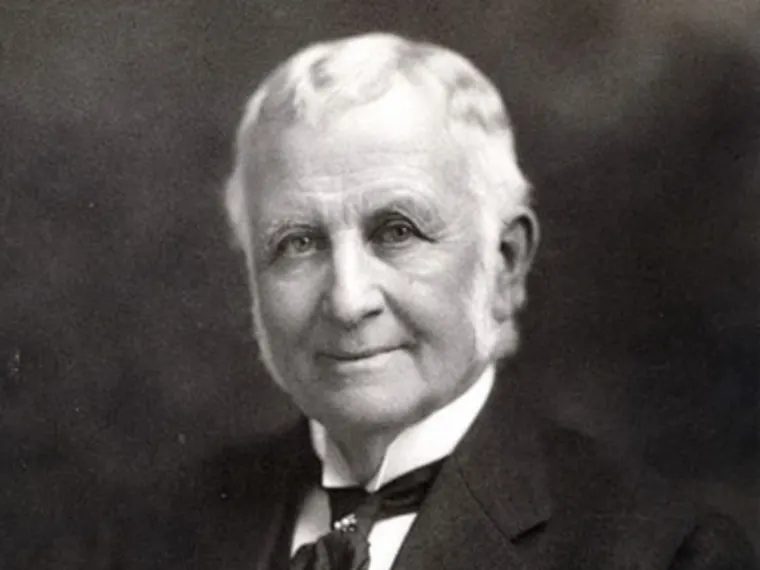
A person with short, white hair and sideburns, wearing a suit and tie, in a sepia-toned portrait with a neutral expression.

1924

William Van Duzer Lawrence approaches Henry Noble MacCracken, President of Vassar College, regarding the founding of a junior college for women in honor of his wife, Sarah Bates Lawrence.

1926

William Van Duzer Lawrence writes the Letter of Instruction regarding the founding of the College.

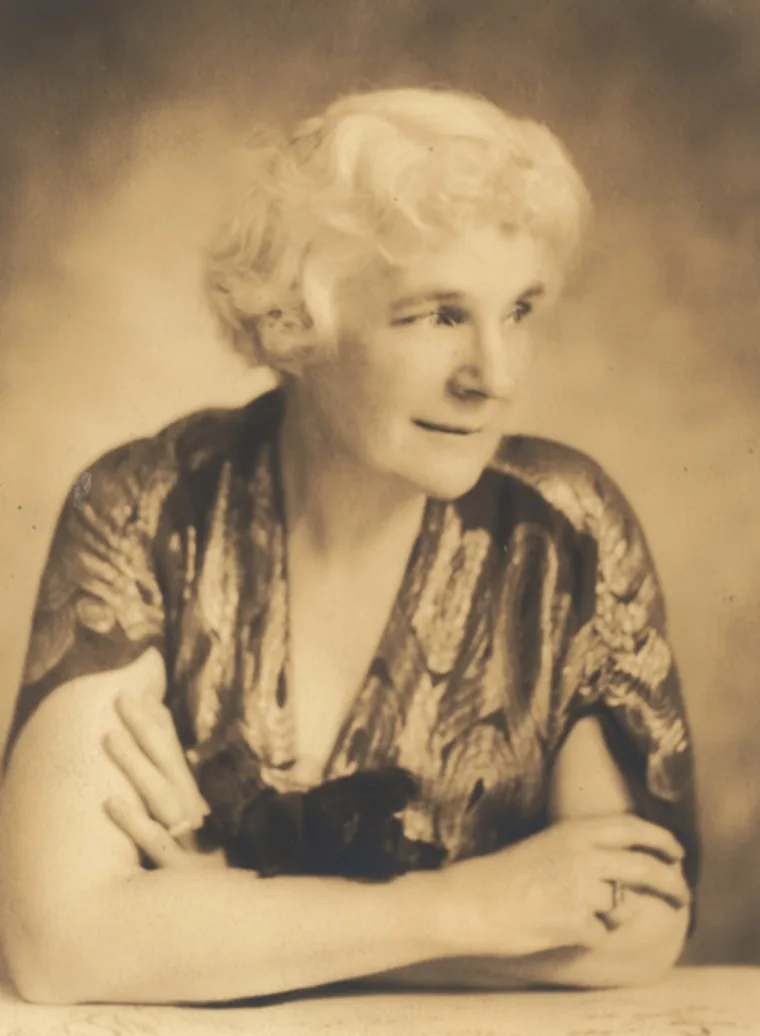
Person with curly hair sits with arms crossed, wearing a patterned top, and looks into the distance with a thoughtful expression.

1926-1929

Marion Coats, Principal of Bradford Academy, is hired as President-Designate of Sarah Lawrence College for Women. She begins her term as the first President (1926-1929).

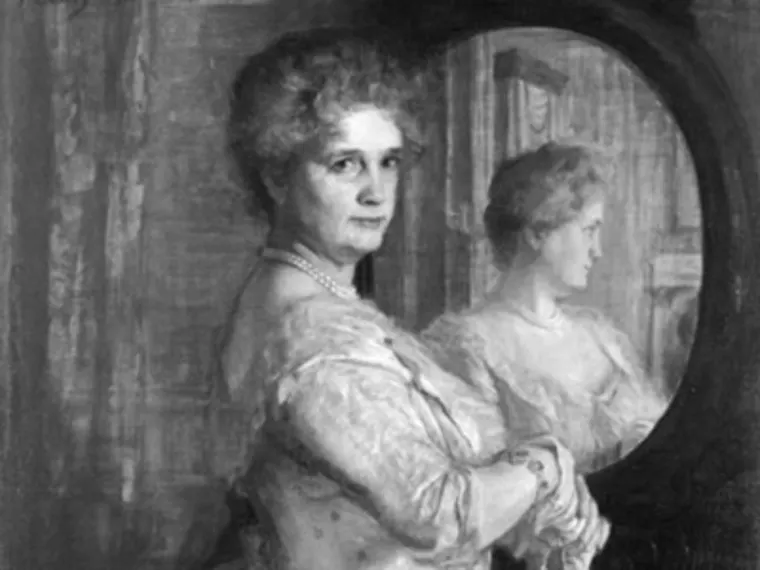
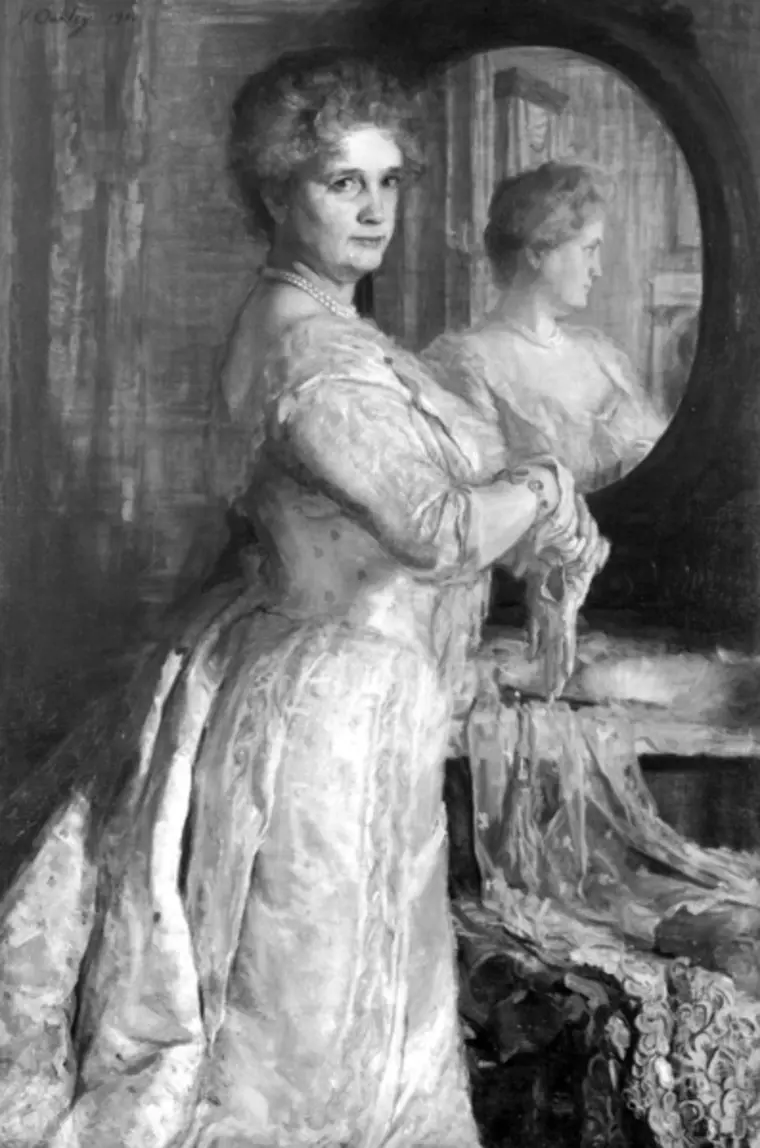
Person in an ornate dress standing by a vanity mirror, looking over with a direct gaze, reflection visible. The setting is elegant and classical.

May 8, 1926

Sarah Bates Lawrence dies.

December 9, 1926

Provisional charter granted to incorporate Sarah Lawrence College for Women.

May 16, 1927

William Van Duzer Lawrence dies.

May 25, 1927

Affiliation with Vassar College Ratified.

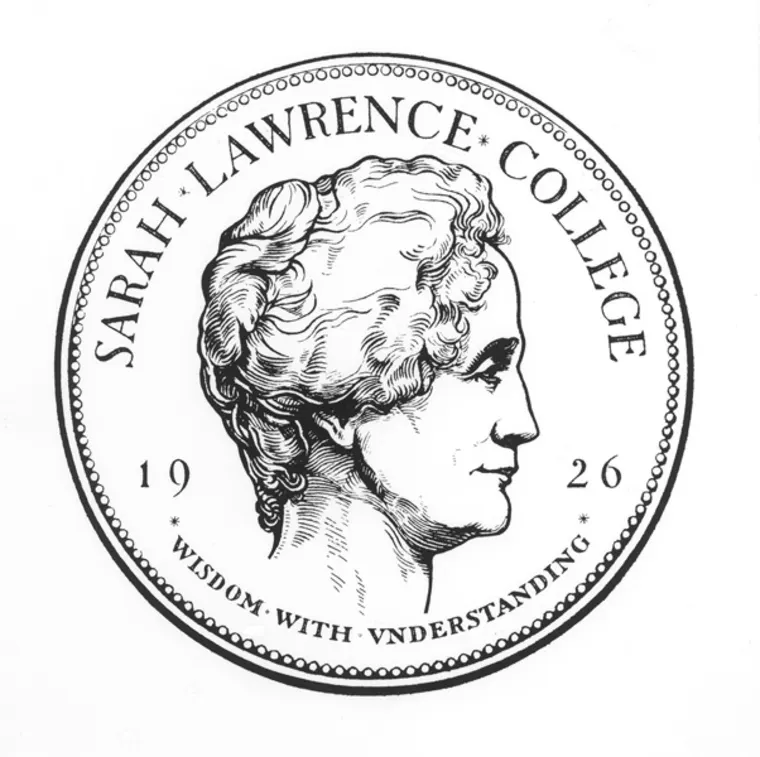
A circular emblem with a side profile of a person, surrounded by "Sarah Lawrence College" and the year 1926, with "Wisdom with Understanding" below.

June 1927

Seal of the College adopted. Designed by Violet Oakley, the seal includes the motto “Wisdom with Understanding.” 

June 1, 1927

By-Laws adopted by the Board of Trustees.

1928-1946

Beatrice Doerschuk begins term as Director of Education (1928-1946).

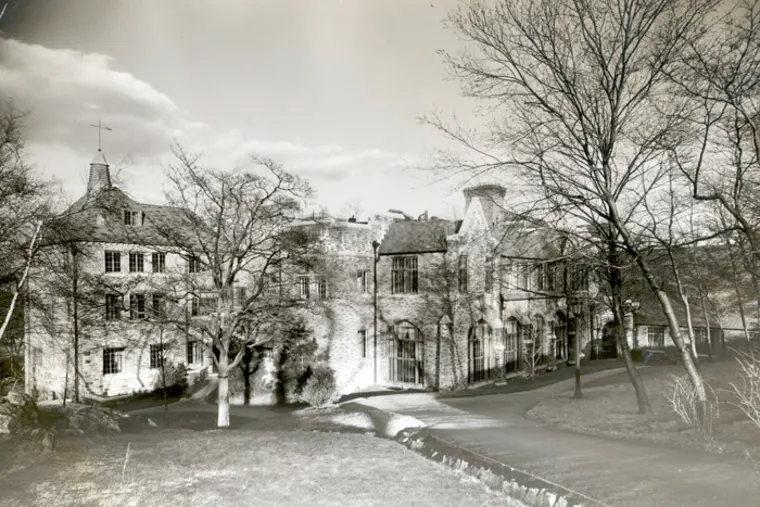
Historic brick building surrounded by leafless trees and a pathway in a grassy area, under a partly cloudy sky.

June 1928

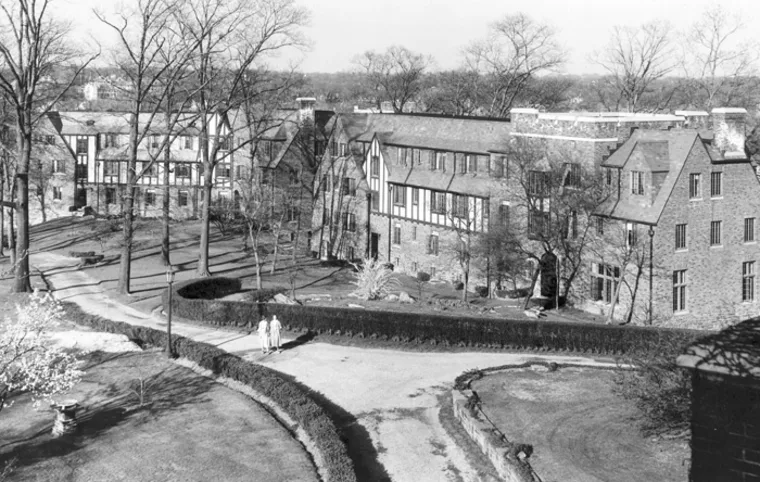
Bates Hall (originally called Tower Hall) completed.

Historic black and white image of a large stone building with a pitched roof, surrounded by bare trees and a winding path.

October 1928

First three dormitories, Dudley Lawrence, Titsworth, and Gilbert (also known as the “Old Dorms”) are completed.

October 4, 1928

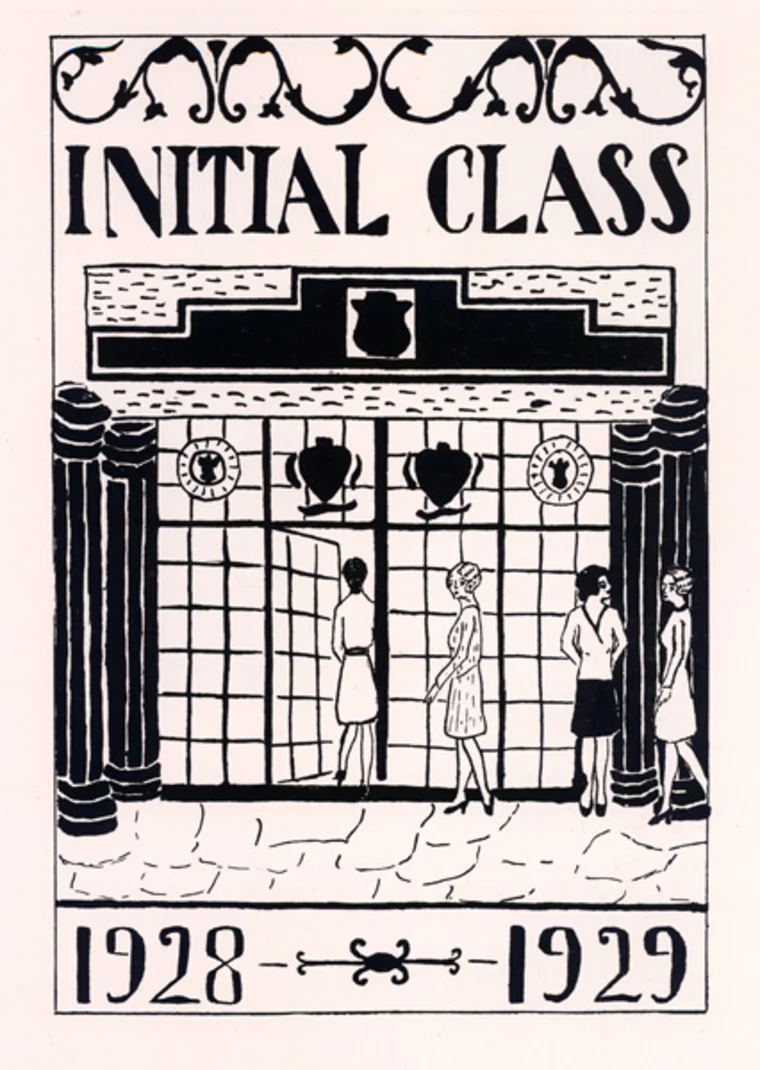
The College welcomes its first students.

1929

Perkin's House (9 Mead Way) purchased.

1929-1947

Wayside Cottage (7 Mead Way), later named Warren House and then Warren Green, purchased. Served as the President’s House from 1929-1947.

Black and white portrait of a person with short, wavy hair and a neutral expression, wearing a formal outfit.

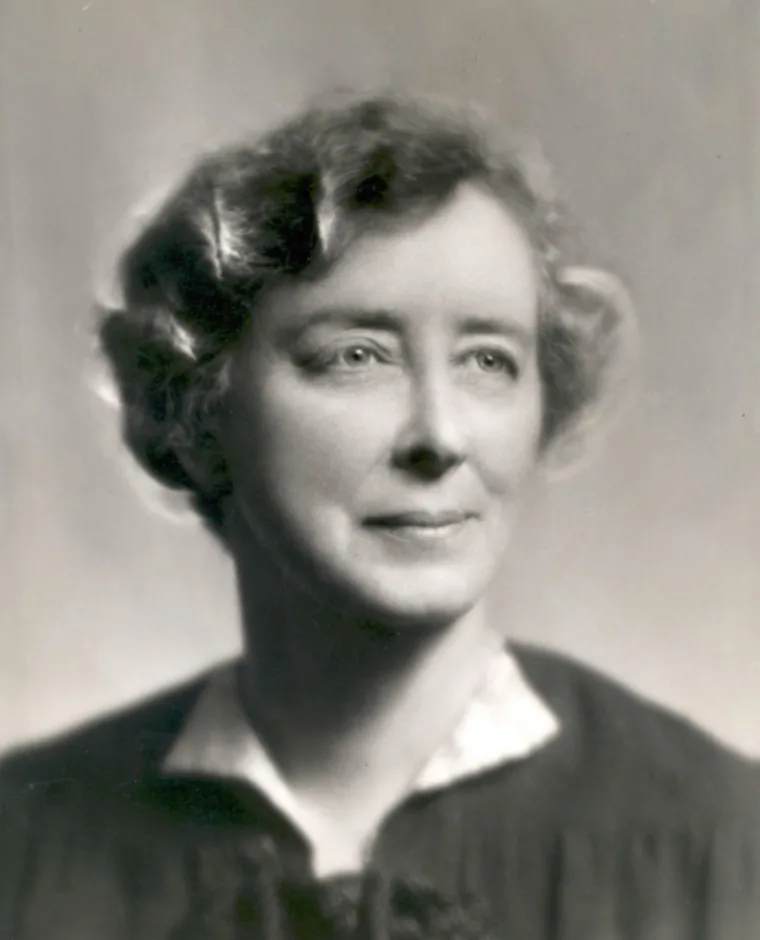
1929-1945

Constance Warren begins term as second President (1929-1945).

Art nouveau illustration titled "Initial Class" with figures in front of a building. Text shows the years 1928-1929.

June 1929

First commencement with one graduate, Ruth Wilmot '29.

June 1930

First graduating class (117) receives the diploma.

Historical brick building with multiple chimneys and arched windows, surrounded by leafless trees and a low hedge.

November 1930

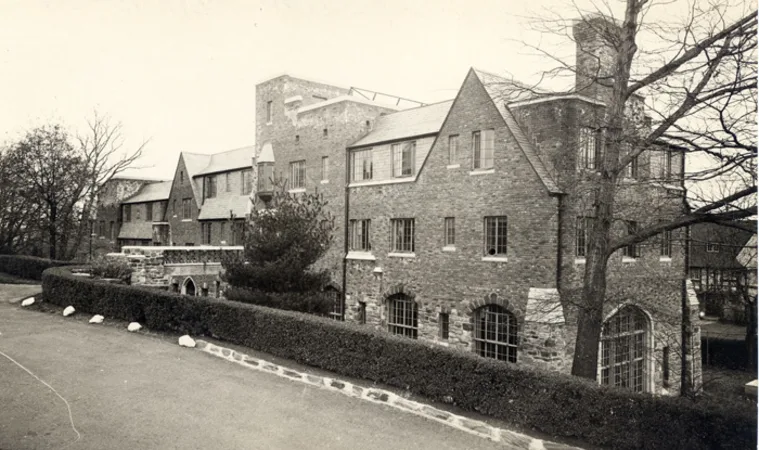
MacCracken Hall completed.

November 1930

In response to the Great Depression, the student-run Social Service Activity establishes the “Community Chest” to support local, national, and international charities. 

September 10, 1931

Absolute charter to grant BA degree awarded.

June 1933

First Bachelor of Arts degree awarded to Isabella Hayes at Commencement.

1934

Robinson House purchased (2 Mead Way).

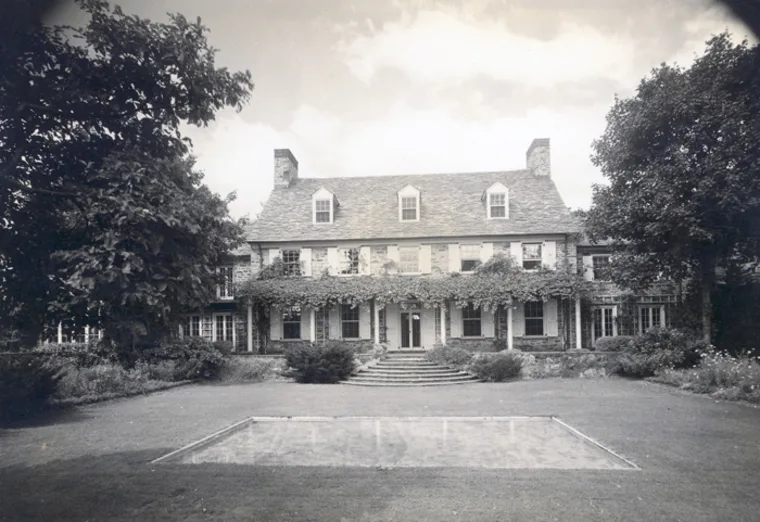
A historic estate with ivy-covered facade, multiple chimneys, and a large central lawn with a rectangular reflecting pool in the foreground.

May 1935

Andrews House purchased.

December 9, 1935

Charter Day is celebrated signifying the 10th anniversary of the granting of the provisional charter.

Affiliation between the Board of Trustees of Vassar College and Sarah Lawrence College terminated. At the termination of the affiliation, Henry Noble MacCracken resigns from the Board of Trustees.

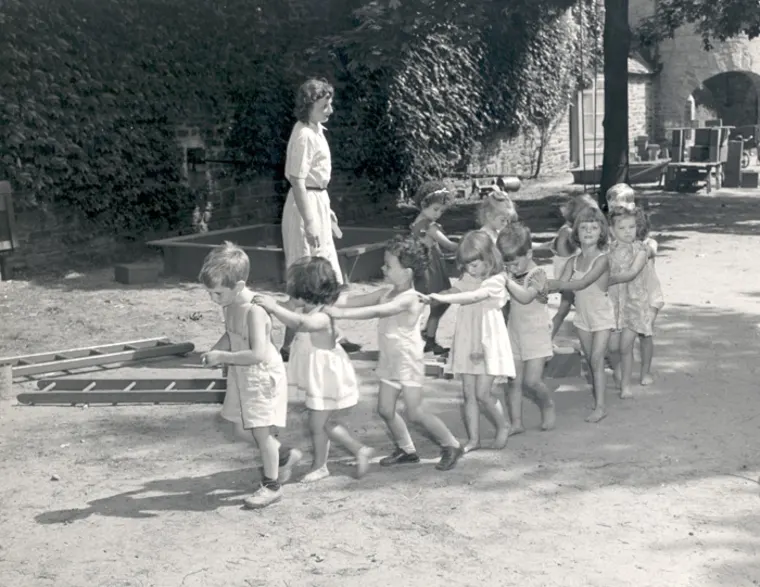
Children are walking in line with hands on each other's shoulders in an outdoor setting with a supervising adult nearby.

1937

Nursery School, predecessor to the Early Childhood Center, opens on campus.

1937

Morris House purchased (8 Mead Way).

1942

The College sponsors several intercultural forums to bring together many different racial groups from southern Westchester County called the United Nationalities Round Tables.

June 1942

Creation of a Student War Board to help Sarah Lawrence students find both work and service placements to help fill the needs in the surrounding communities brought about by the war.

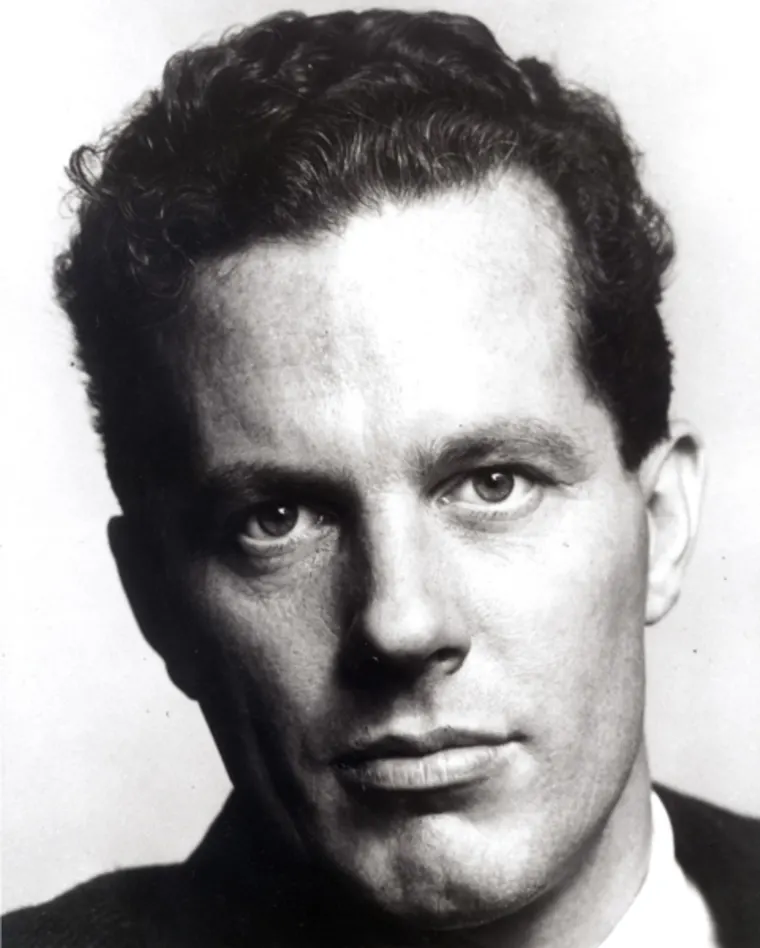
Black and white close-up portrait of a person with short curly hair, looking directly at the camera with a neutral expression.

1945-1959

Harold Taylor begins term as third President (1945-1959).

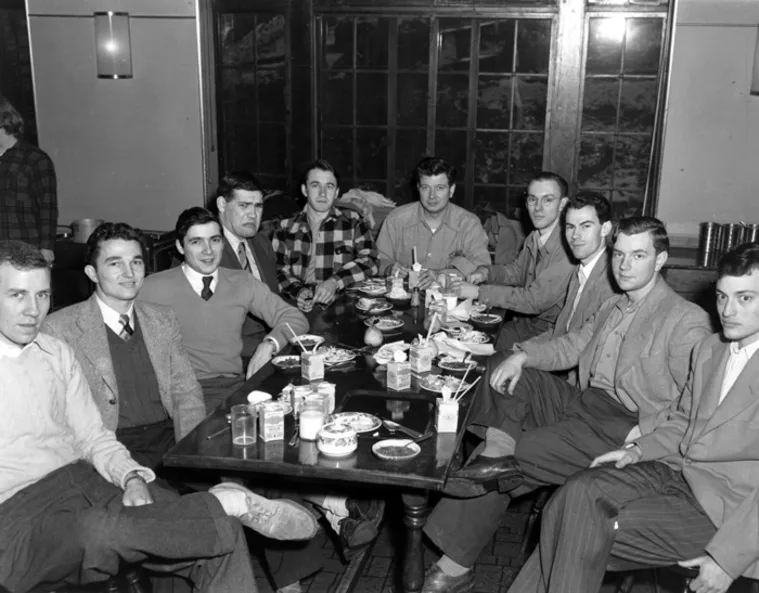
A group of individuals seated around a table with dishes, drinks, and food in a dining setting, wearing a mix of casual and formal attire.

1946

First men are admitted as undergraduate students under the G.I. Bill.

1946-1957

Esther Raushenbush appointed Dean of the College (1946-1957).

1947

Second President’s House purchased at 24 Brook Road. This served as the President’s House from 1947 to 1954 when the house was demolished to build the Sprain Brook Parkway.

February 28, 1947

Name of the College officially changed from Sarah Lawrence College for Women to Sarah Lawrence College.

July 15, 1949

Amendment approved by Regents to grant MA degree. The College introduces programs leading to individualized MA degrees.

1952-1953

First MA degrees granted (2 to men, 2 to women).

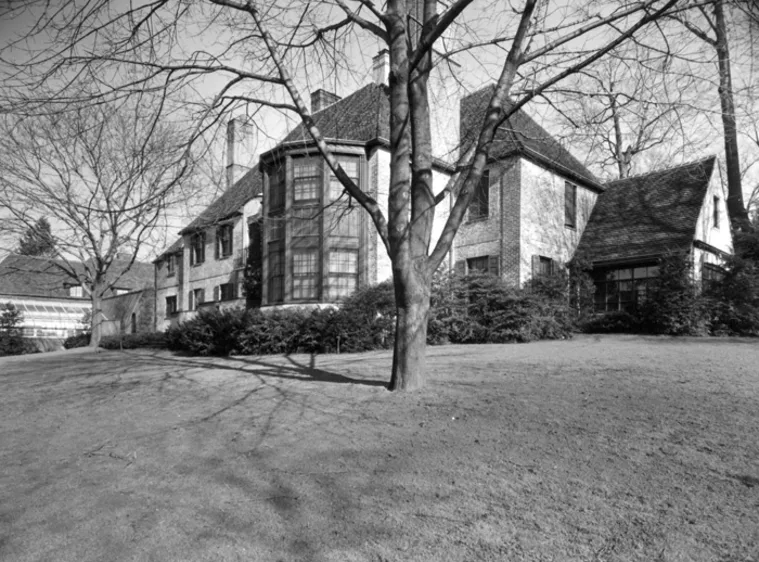
Large brick house with multiple gables and chimneys, surrounded by trees and shrubs, viewed from a yard on a sunny day.

1951

Kober House purchased.

The last of the men on the G.I. Bill graduate.

November 1952

Student Arts Center, designed by Architect Marcel Breuer, dedicated. Reisinger Auditorium opened.

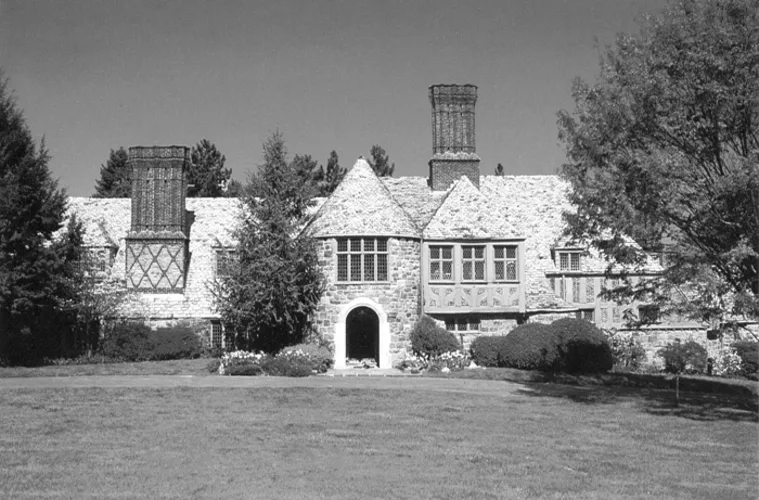
Historic stone building with a steeply pitched roof and arched entrance, surrounded by trees and grass.

1954

Third President’s House (935 Kimball Avenue) with attached Morrill House purchased.

1955

Tweed House purchased.

1957-1959

Laura Bornholdt appointed Dean of the College (1957–1959).

1959-1961

Gerard Fountain appointed Acting Dean and then Dean of the College (1959–1961).

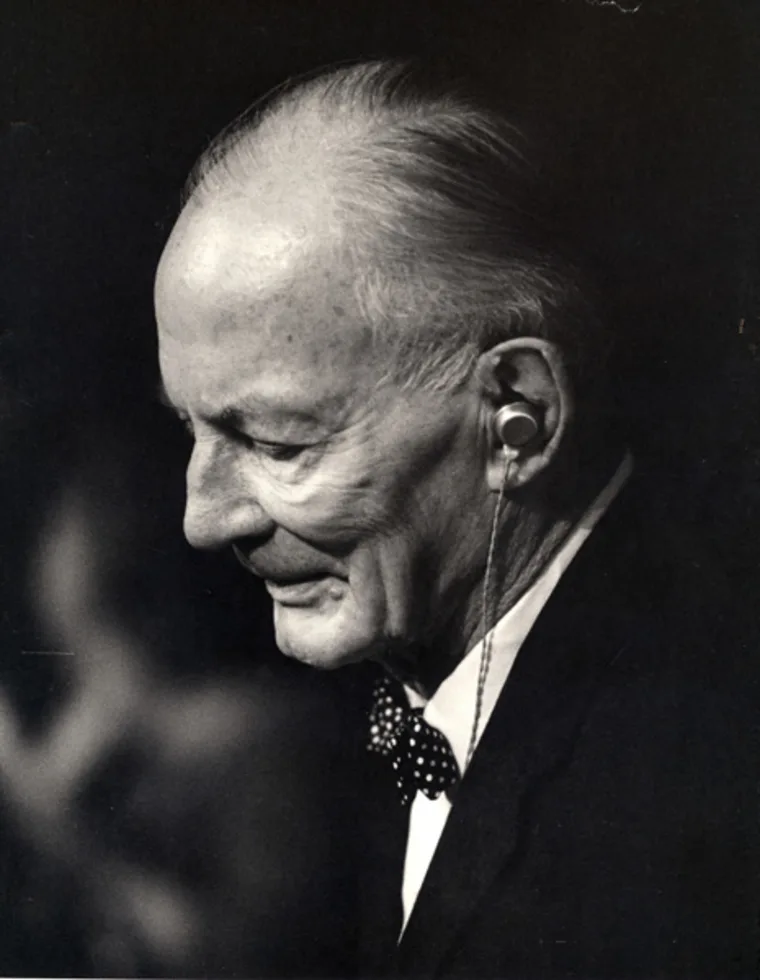
Elderly person with a hearing aid and bow tie, shown in profile in a black and white photo.

1959-1960

Harrison Tweed appointed Acting President for 1959–1960.

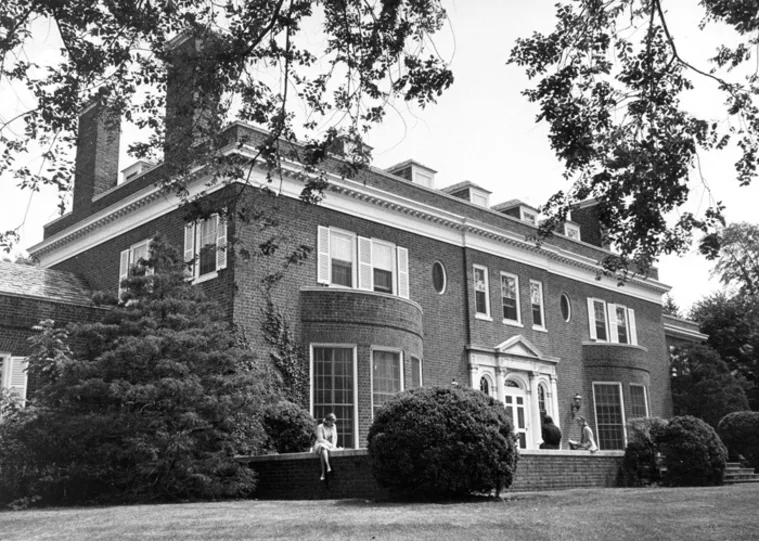
Historic brick building with large windows and chimneys, surrounded by trees and bushes. People are sitting and standing on the front steps.

May 1959

Marshall Field House purchased.

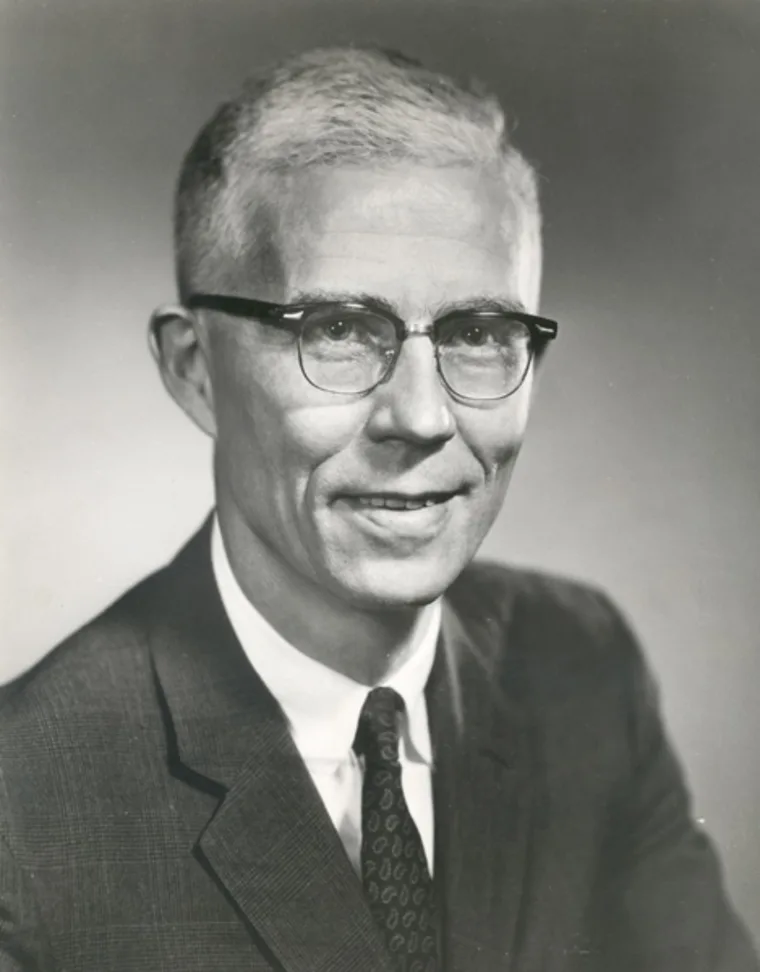
Person with short light hair, wearing glasses, a suit, and tie, looking forward with a neutral expression in a black-and-white photo.

1960-1965

Paul Ward begins term as fifth President (1960–1965).

1961-1964

Marjorie Downing appointed Dean of the College (1961–1964).

1961

Garrison, Rothschild, and Taylor (RGT) dormitories completed. Designed by architect Philip Johnson.

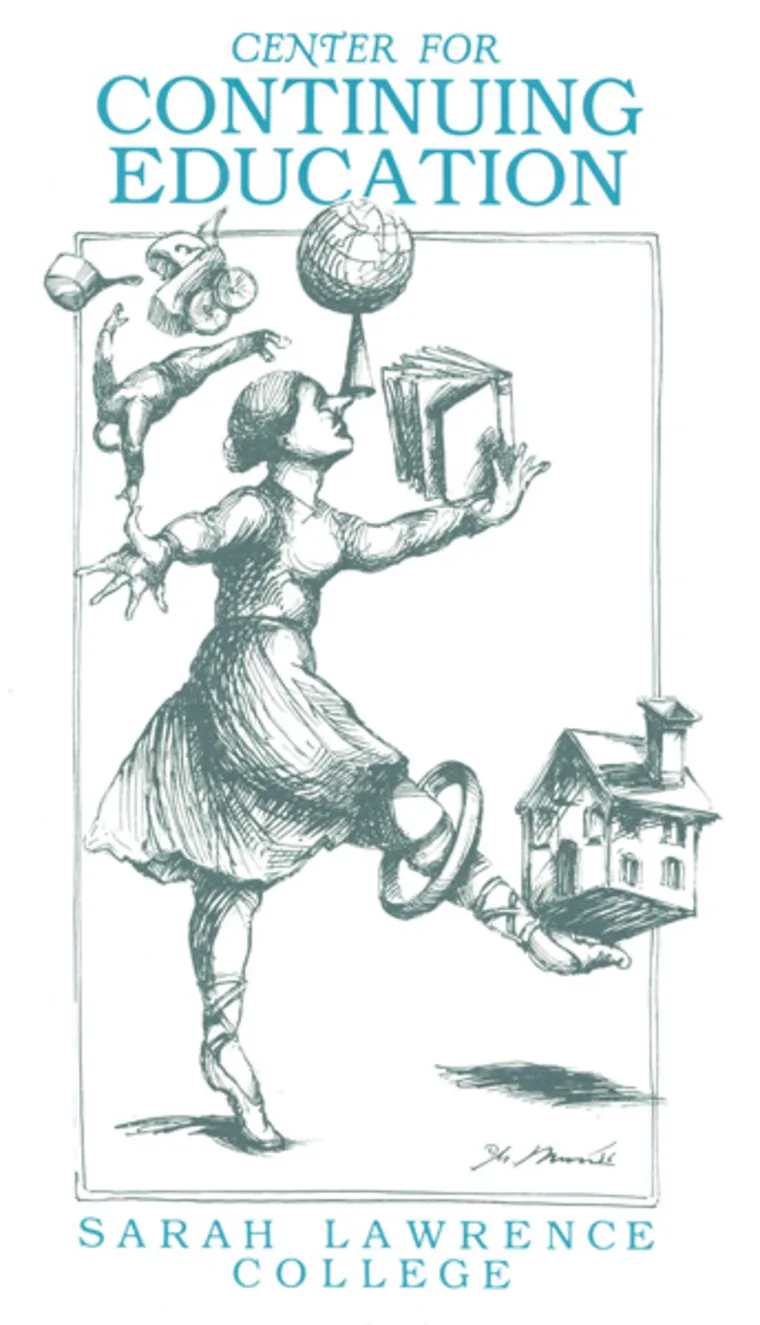
Person balancing objects: globe, book, house, cup. Text reads "Center for Continuing Education, Sarah Lawrence College."

1962

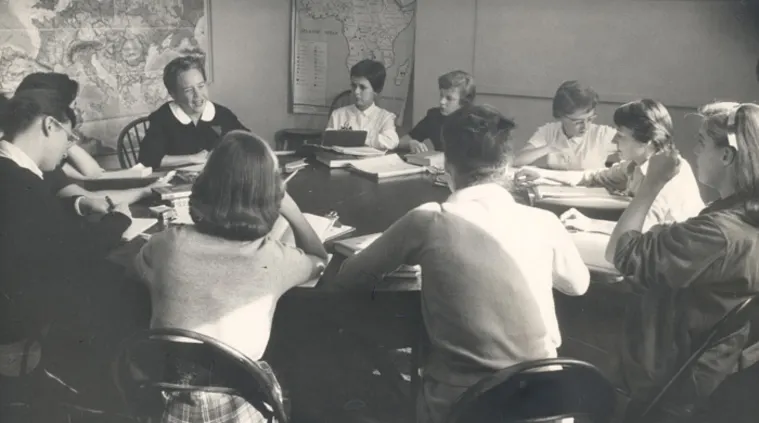
Center for Continuing Education established as the first full-scale undergraduate program in the country designed for returning adult students.

September 1962

Creation of the Mt. Vernon Tutoring Program.

1963

Mansell House (10 Mead Way) purchased.

1964-1965

Esther Raushenbush appointed Acting Dean of the College (1964–1965).

A group of people sitting around a table in a classroom, with maps on the wall, engaging in discussion or study.

May 1964

Lynd House purchased.

August 1964

Brebner House purchased.

1965-1971

Jacquelyn Mattfeld appointed Dean (1965–1971).

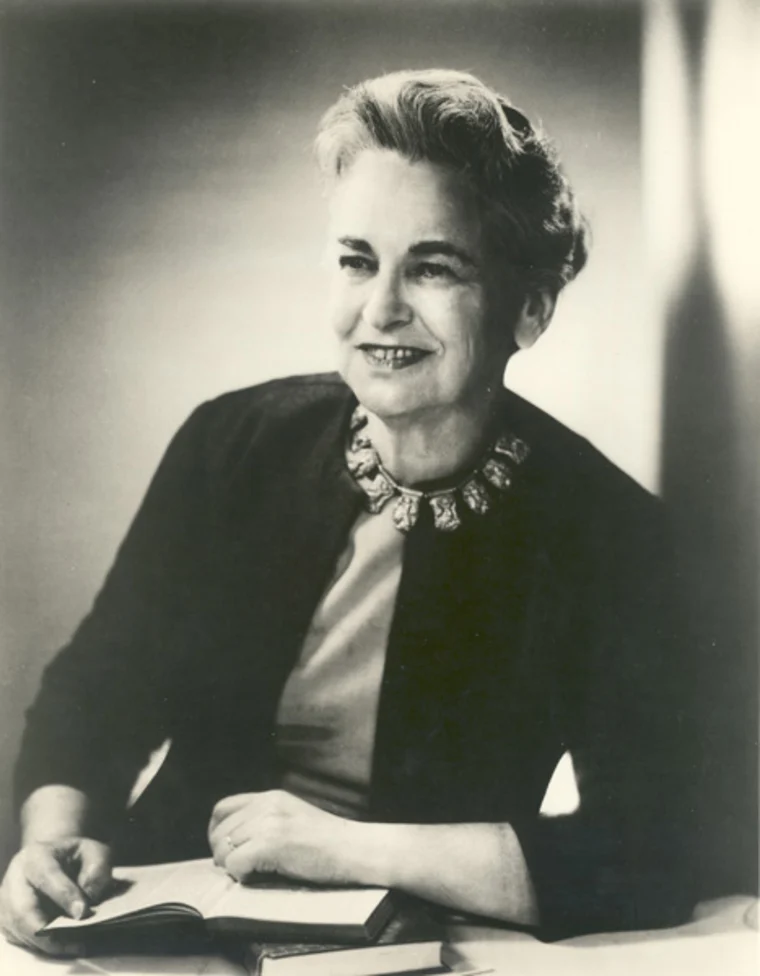
Person sitting at a table, smiling, with a book open in front. Wearing a dark jacket and a patterned necklace. Black and white photograph.

1965-1969

Esther Raushenbush begins term as sixth President (1965–1969).

December 1966

Upward Bound Program established.

1967

North Building completed.

September 1967

Cooperative College Center created.

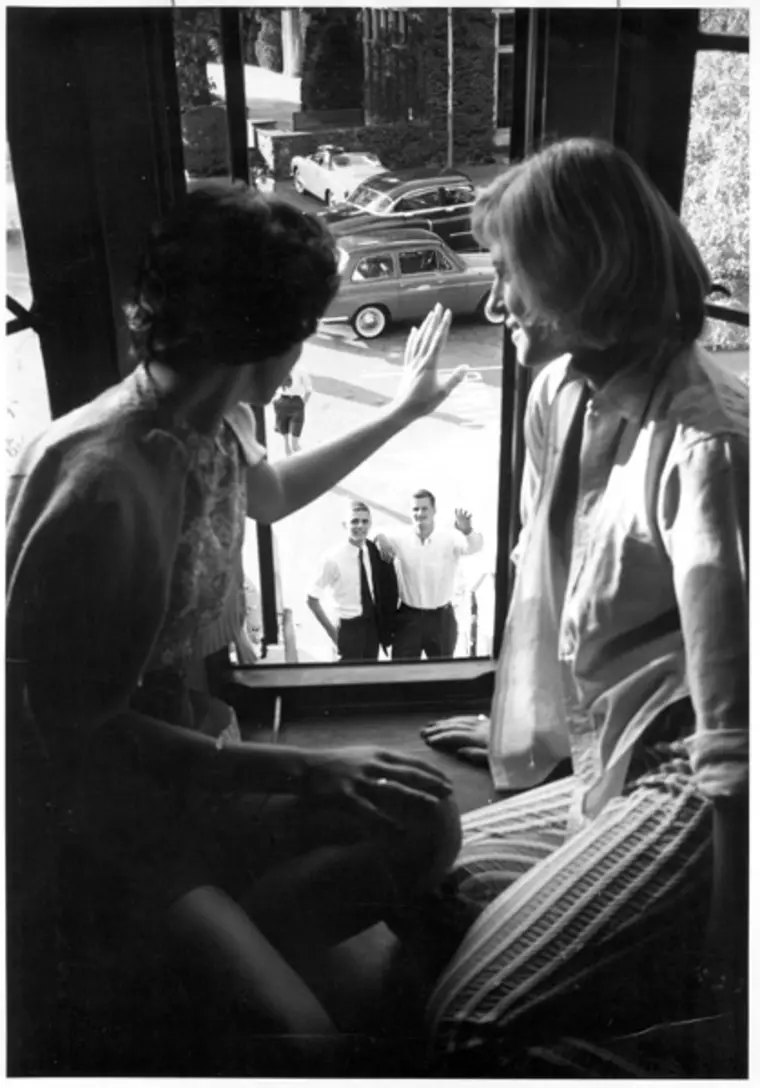
Two people sit by a window, one waving to two individuals outside. Several vintage cars are parked on the street below.

1968

The College becomes coeducational.

July 1968

Institute for Community Studies created.

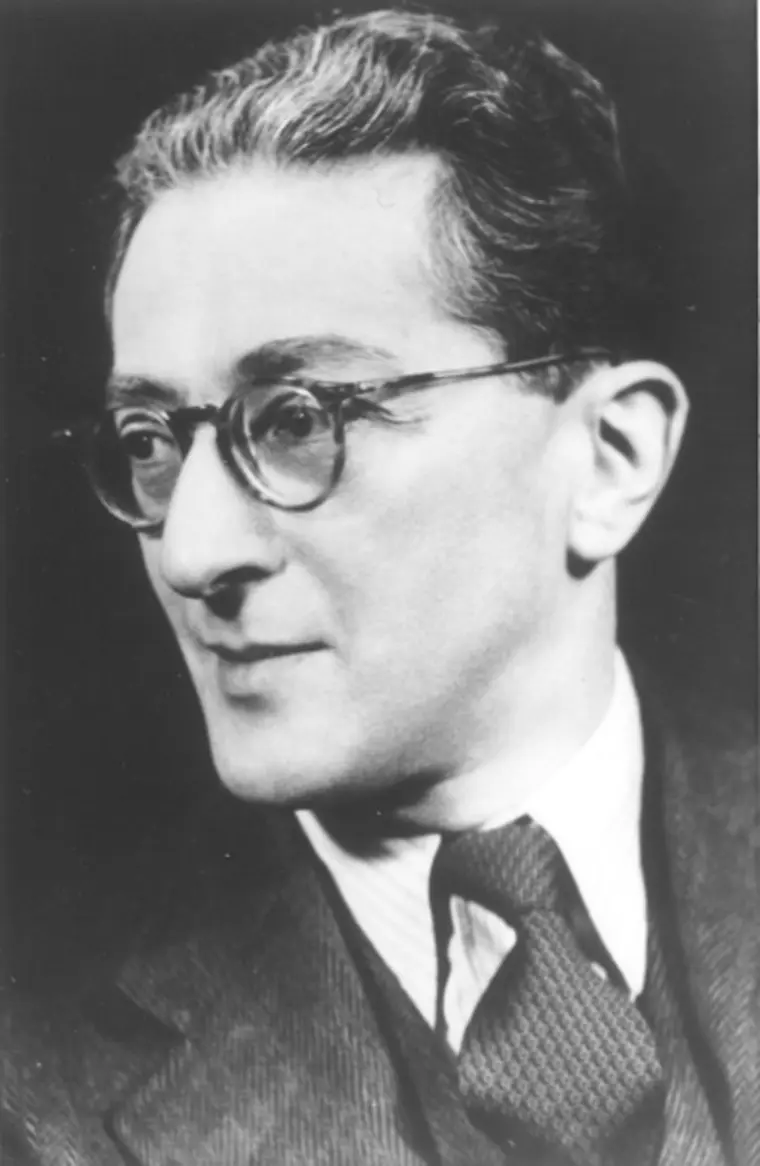
Person with glasses, wearing a suit and tie, looking to the side in a black and white portrait.

1969

Slonim House purchased.

1969

Human Genetics Graduate Program established.

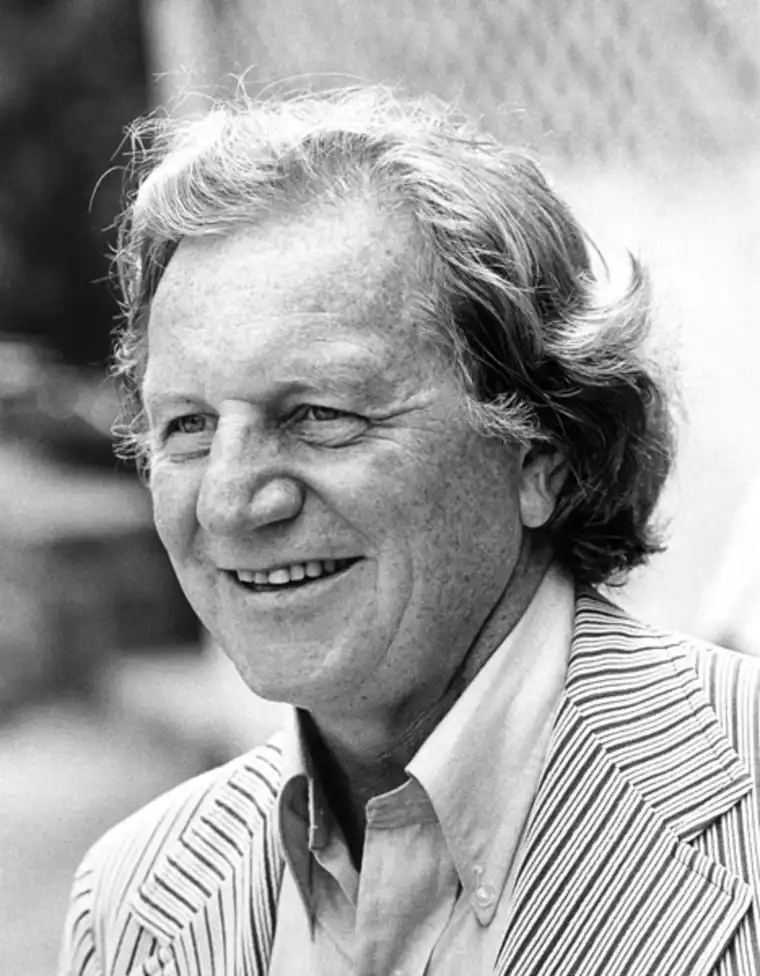
Smiling person with wavy hair in a striped blazer, viewed in black and white.

1969-1981

Charles DeCarlo begins term as seventh President (1969–1981).

April 25, 1969

Charter amended to grant MFA degree.

1970

Swinford House purchased.

1971-1977

Robert Wagner appointed Dean (1971–1977).

1971

Child Development Graduate Program established.

Lyles House purchased.

1972

Women’s History Graduate Program established.

Andrews Court completed.

May 1973

Youth Theatre Interactions founded.

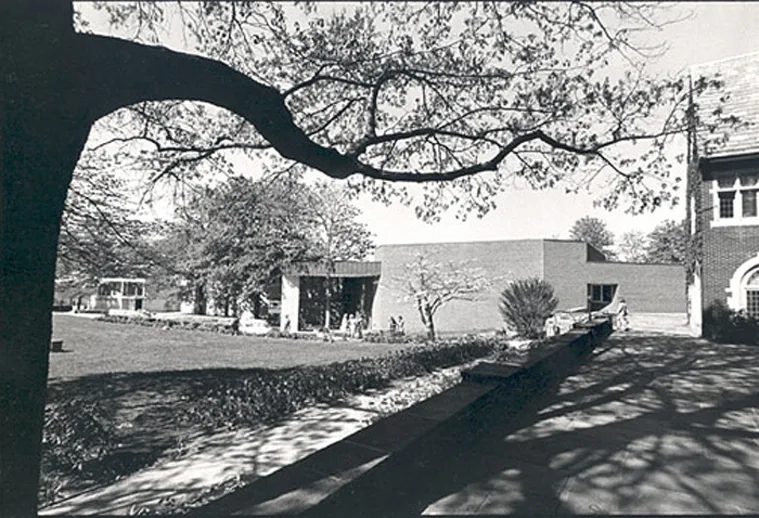
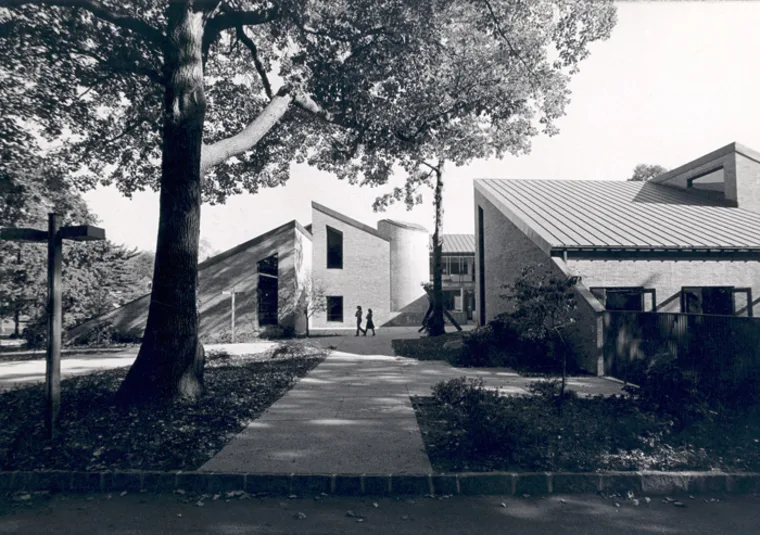
Sidewalk beside trees and modern and traditional brick buildings. A large tree branch extends across the foreground in a leafy courtyard.

1974

Performing Arts Center completed.

Campus sidewalk lined with trees and modern buildings; two individuals walk along the path.

1974

Esther Raushenbush Library completed.

1974

Theatre Outreach Program founded.

1976

Slonim Woods completed.

1977-1980

Alison Baker appointed Dean (1977–1980).

1980

Health Advocacy Graduate Program established.

1980-1985

Ilja Wachs appointed Dean (1980–1985).

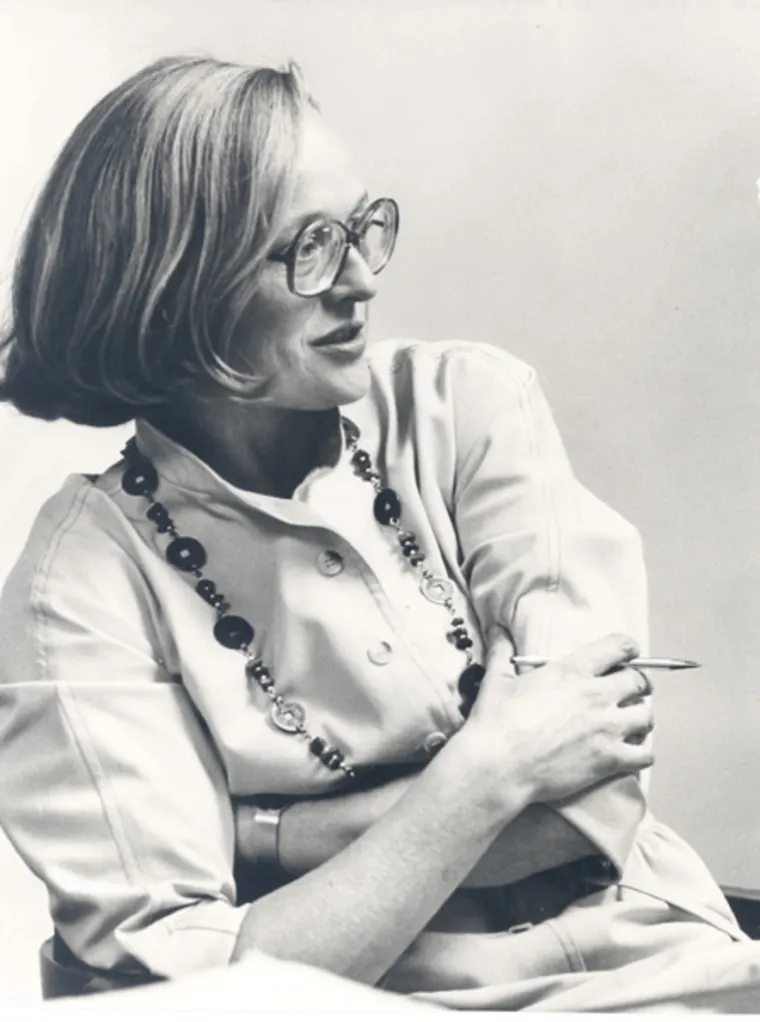
Person wearing glasses and a beaded necklace, sitting with crossed arms and holding a pen, looking to the side. Black and white photo.

1981-1998

Alice Stone Ilchman begins term as eighth President (1981–1998).

1984

Faculty House purchased.

1985

Art of Teaching Graduate Program established.

1985-2007

Barbara Kaplan appointed Dean (1985–2007).

1987

Child Development Institute established.

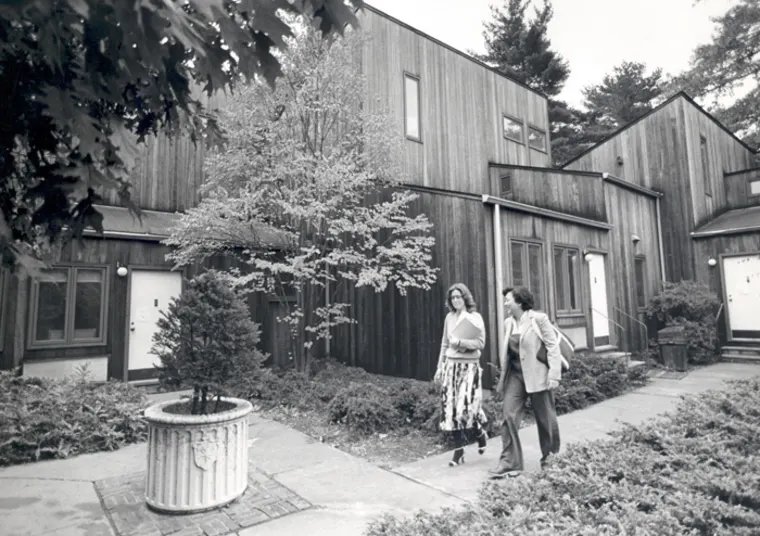
Two people walk on a path beside wooden buildings surrounded by trees and shrubs. A large planter is visible in the foreground.

Fall 1989

Andrews Court completed.

1990

Schmidt House purchased.

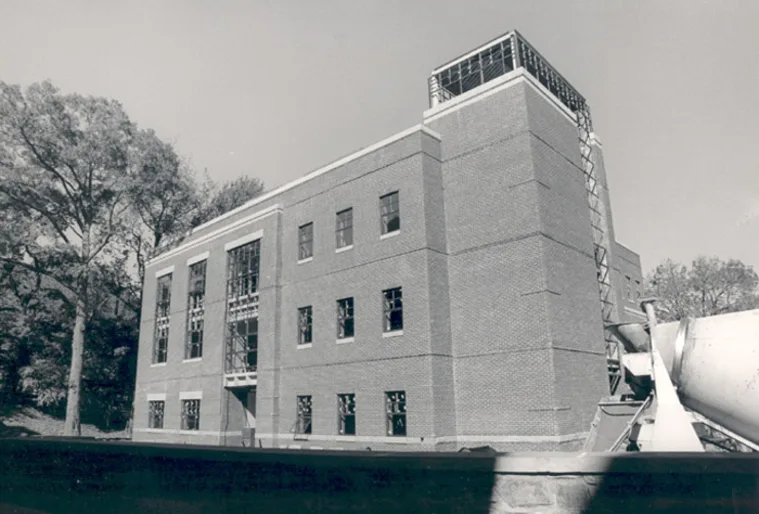
A brick building under construction with scaffolding and trees in the background, surrounded by construction equipment.

1994

Alice Stone Ilchman Science Center completed.

1995

Write-to-Right Program created.

1997

Bedford Hills College Program begins.

December 1997

Office of Community Partnerships and Service Learning created.

1998

Campbell Sports Center completed.

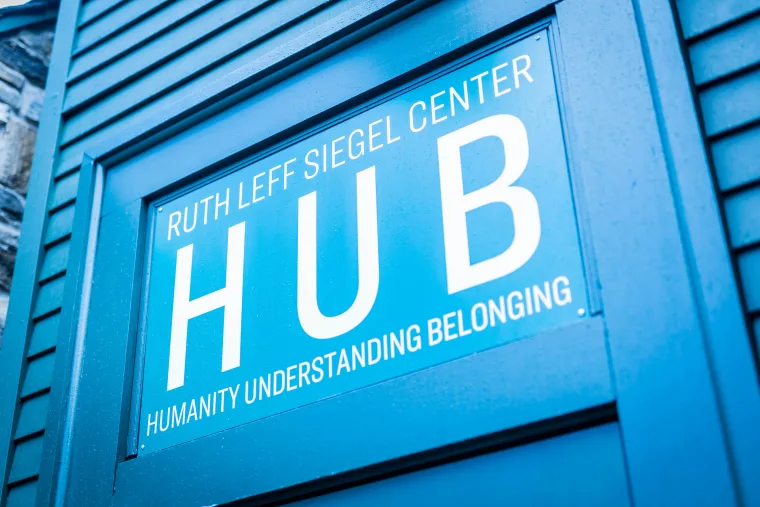
The Pub renamed the Ruth Leff Siegel Center.

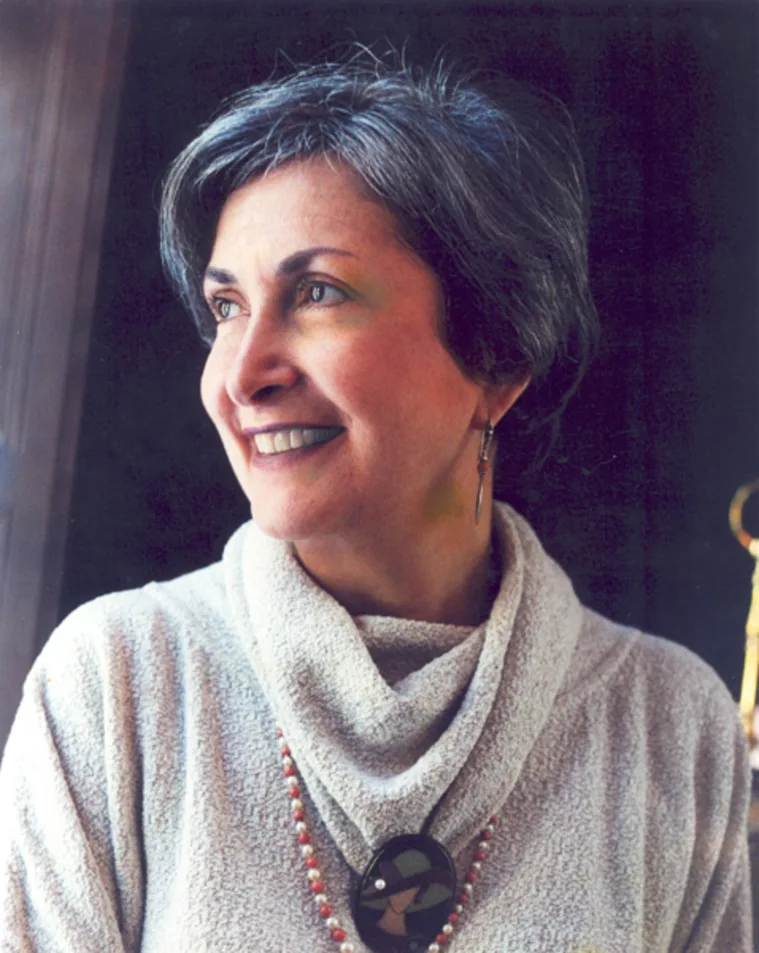
Person with short gray hair smiling and looking to the side, wearing a light sweater and a pendant necklace.

1998-2007

Michele Tolela Myers begins term as ninth President (1998–2007).

2001

Hill House purchased.

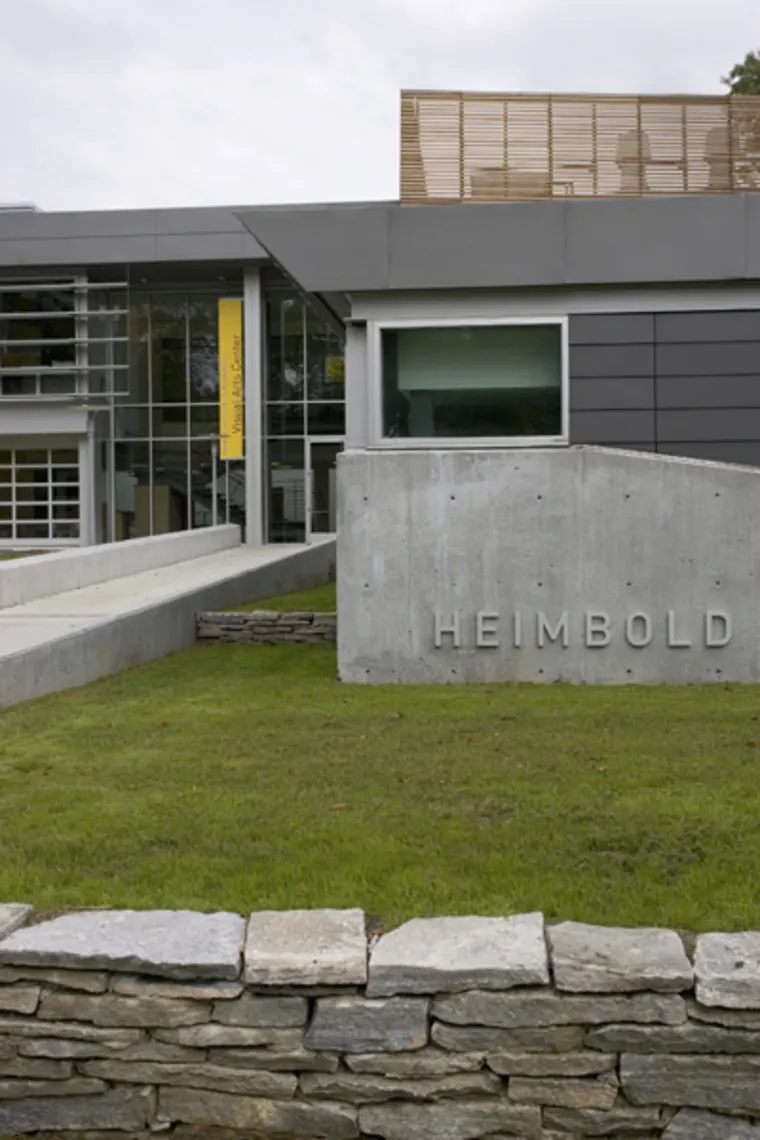
Modern building with a sign reading "Heimbold" on a concrete wall, large glass windows, and a yellow banner displaying "Visual Arts Center."

2004

Heimbold Visual Arts Center completed.

2004

45 Wrexham purchased.

2007-2009

Pauline Watts appointed Interim Dean (2007–2009).

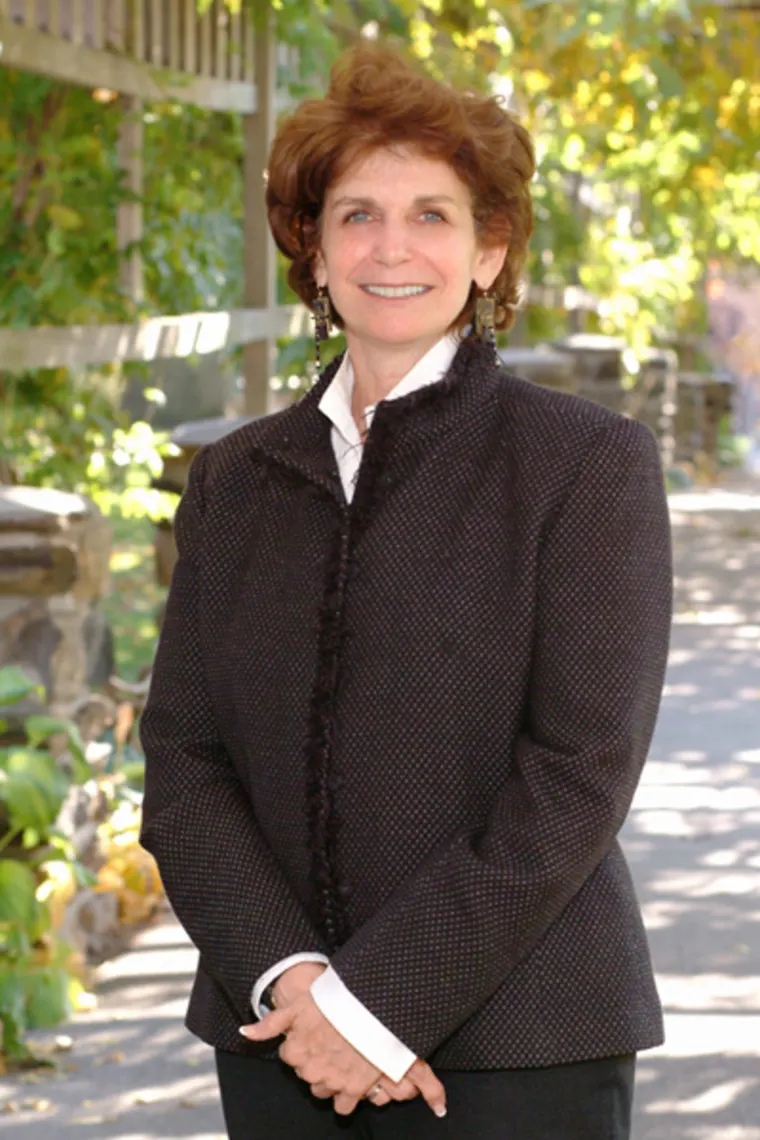
Person in a dark patterned jacket smiling outdoors, with sunlight filtering through green foliage in the background.

2007

Karen Lawrence begins term as tenth President.

2009-2015

Jerrilynn Dodds appointed Dean (2009–2015).

2012

Master of Science in Dance/Movement Therapy established.

January 2012

Martin Luther King, Jr. Day of Service implemented.

2013

Center for the Urban River at Beczak launched.

2015

Kanwal Singh appointed Dean.

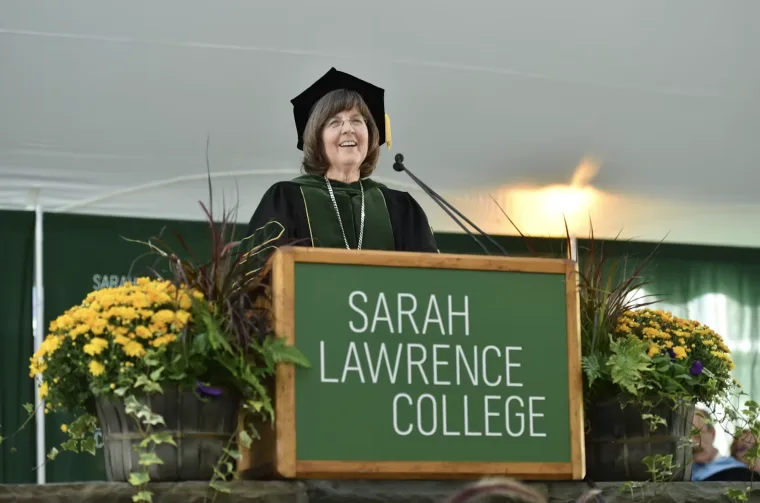
Person in academic regalia speaks at a podium with "Sarah Lawrence College" sign, surrounded by flowers.

2017

Cristle Collins Judd inaugurated as the College's 11th President.

2021

SLC established transfer partnerships with Westchester Community College and Bronx Community College, aimed at opening the doors of opportunity to more students.

The College received the largest gift ($20 million) in its history from an anonymous donor, a grant from the Mellon Foundation aimed at addressing the climate crisis and environmental justice through the humanities, and a $1.8 million grant from the Warren Alpert Foundation to increase diversity in genetic counseling.

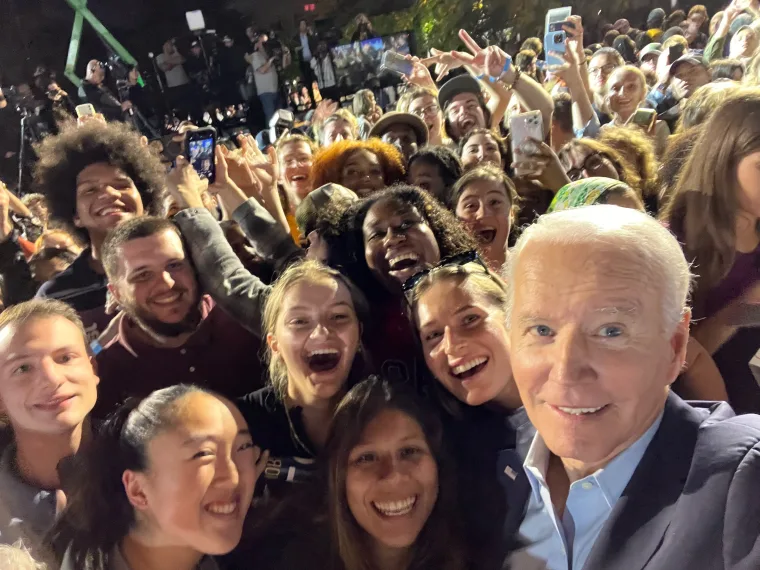
A group of smiling individuals taking a selfie together at an outdoor event with a large, cheerful crowd in the background.

2022

First ever visit from a sitting U.S. President, Joe Biden.

2024

Partnered with NYU’s Grossman School of Medicine to create a new master’s degree in Genome Health Analysis.
Sign reads "Ruth Leff Siegel Center HUB - Humanity Understanding Belonging" on a blue wall with horizontal siding.

2024

The Ruth Leff Siegel Center (formerly known as “The Pub” among other things) was renovated and rechristened The HUB, a center for Humanity, Understanding, and Belonging.
Green circular emblem of Sarah Lawrence College with a griffin holding a quill in the center, surrounded by text, "est. 1926".

2026

The College celebrates its centennial.
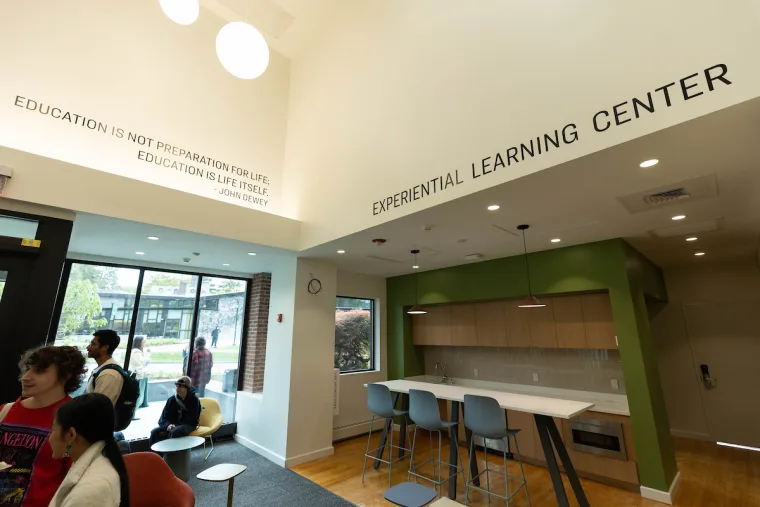
People inside a room labeled "Experiential Learning Center" with a quote on the wall and seating near windows.

2026

The College completes work on The Experiential Learning Center, the latest campus enhancement aimed at meeting the needs of today's students.
Our Founders
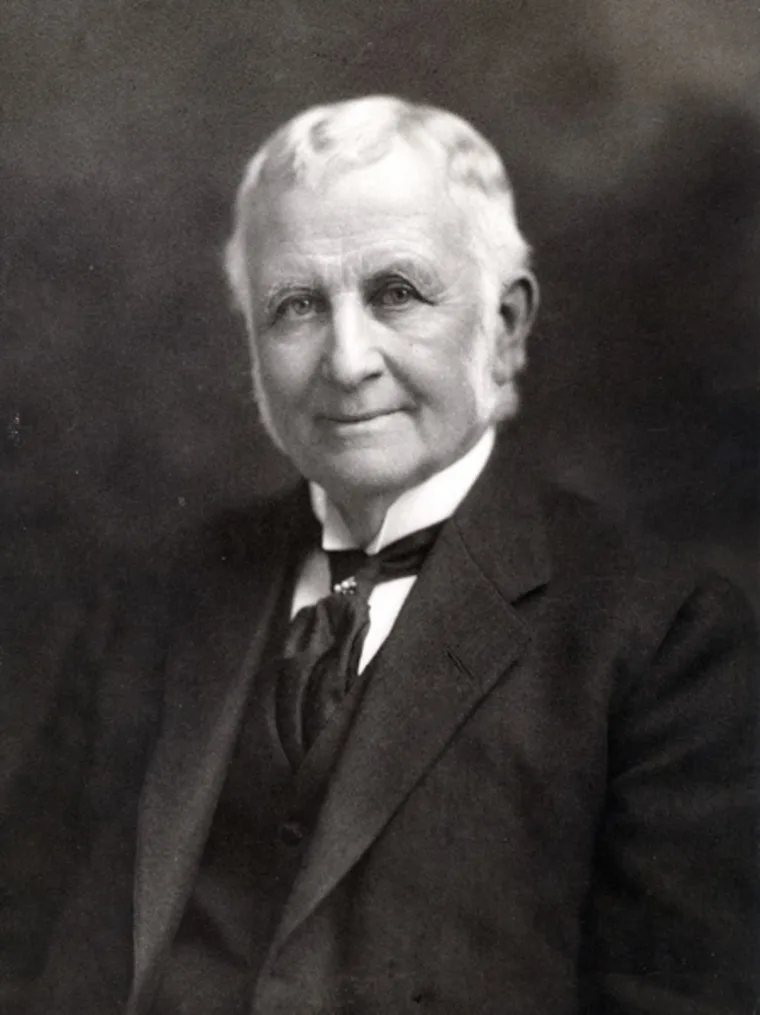
Older person with short white hair and sideburns, dressed in a dark suit and white shirt, smiling slightly in a vintage black-and-white portrait.

William Van Duzer Lawrence

Born in 1842 on a farm outside Elmira, New York, William Van Duzer Lawrence established Lawrence Park in Bronxville, New York, a housing development that catered to the artistic community, in 1890. In 1908, William donated to the building of a new hospital in Bronxville, named Lawrence Hospital after its benefactor. Upon the death of his wife, Sarah, in 1926, William decided to donate his residence in Bronxville to the establishment of an all-girls junior college. The school was named Sarah Lawrence College in honor of his late wife. William died in 1927, less than a year after the initial founding of Sarah Lawrence College.

A person in formal attire looks at the viewer, standing beside a mirror reflecting their profile. The setting appears historical or vintage.

Sarah Bates Lawrence

Born in 1846 in Monroe, Michigan, Sarah Bates Lawrence never pursued a college education, but went on to emphasize the importance of higher education for young women throughout her lifetime. Upon moving to New York with her husband in 1889, Sarah became active in the New York Exchange for Women’s Work, serving on its Board of Managers before becoming president of the organization. In 1916, the Lawrences bought a summer home in Daytona, Florida, where Sarah became actively involved in African American educator Mary McLeod Bethune’s Bethune-Cookman College. Sarah Lawrence died in 1926.

SLC is Everywhere!

Kat Stratford knows that Sarah Lawrence is where it’s at, and she’s far from alone. SLC has long held a place in the cultural imagination, appearing again and again in movies, TV shows, and books as a shorthand for creativity, intellectual independence, and thinking beyond convention. Explore Sarah Lawrence’s many moments on screen and on the page.

Two people, one resting on the arm of a couch, with text "10 Things I Hate About You" beside them.

Sarah Lawrence Firsts

Sarah Lawrence College has long been a pioneer in education. But do you know just how many firsts the College has notched along the way? Here’s a look at some of the policies and programs Sarah Lawrence was first to adopt.

  • Sarah Lawrence College (along with Bennington) was the first college to incorporate the ideas and ideals of progressive education into its curriculum. The College was also among the first colleges in the United States to include the arts within its curriculum, underscoring the belief that development of the creative faculties plays a central role in the growth of the individual.

  • Sarah Lawrence was one of the first schools, and is still one of only a few schools, to have an alternative to dissection policy, which allows students to have a choice in whether to dissect or not in their pursuit of knowledge. The policy was enacted as a result of student campaigns.

  • In 1937, the Early Childhood Center (ECC), one of the earliest laboratory preschools in the country, opened at Sarah Lawrence College. Today, the ECC continues to serve as a fieldwork site for SLC's undergraduate and graduate students, pairing them with preschoolers in a dynamic and nurturing environment.

  • In 1962, underscoring its commitment to lifelong learning, the College opened its doors to adult women who had not completed their undergraduate degrees when it launched The Center for Continuing Education (CCE). CCE was one of the first programs of its kind and, over the years, served as a model for other institution's programs.

  • In 1969, the Human Genetics Graduate Program was established as the first master's-level genetic counselor training program in the United States. Today, the Joan H. Marks Graduate Program in Human Genetics is the nation's largest such program, and has trained more than half of the country’s genetic counselors.

  • In 1972, Sarah Lawrence founded the nation's first graduate program in Women's History, making the College the first to offer a master's degree in the field.

  • In 1981, the College established the nation's first master's degree program in health advocacy, helping to establish the field of patient advocacy and healthcare reform.

  • In 2001, the College created the first semester-long liberal arts study away program in Havana, Cuba. Sarah Lawrence remains one of the only American colleges operating an international program in that country.

  • The Heimbold Visual Arts Center, completed in 2004, was the first LEED certified college or university visual arts building. LEED stands for Leadership in Energy & Environmental Design, an internationally recognized green building certification system.

Upcoming events

© Sarah Lawrence College. All rights reserved.