Sarah Lawrence College

About Sarah Lawrence

A Century of Bold Thinking

About Sarah Lawrence College

Sarah Lawrence is a prestigious, residential, coeducational liberal arts college. Founded in 1926 and consistently ranked among the leading liberal arts colleges in the country, Sarah Lawrence is known for its pioneering approach to education, rich history of impassioned intellectual and civic engagement, and vibrant, successful alumni. In close proximity to the unparalleled offerings of New York City, our historic campus is home to an inclusive, intellectually curious, and diverse community.

Talented, creative students choose Sarah Lawrence for the opportunity to take charge of their education. In close collaboration with our dedicated, distinguished faculty, students create a rigorous, personalized course of study and connect their passions across a wide array of disciplines. They graduate knowing how to apply the knowledge, skills, and critical thinking necessary for life after college.

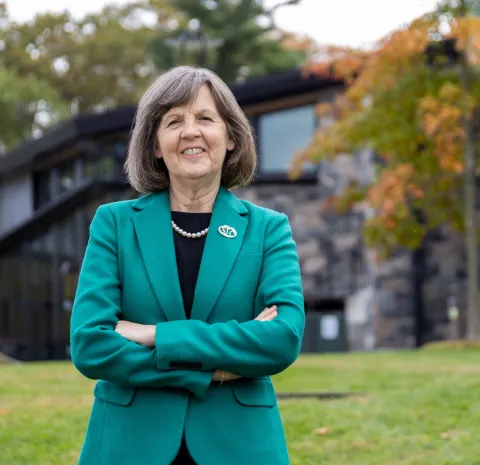
Person in a green blazer with arms crossed, standing in front of a modern building with autumn trees in the background.
Cristle Collins Judd, 11th president of SLC
Celebrating Our Centennial

Timely Education. Timeless Values.

For 100 years, Sarah Lawrence has empowered curious and creative lifelong learners – people who question deeply, imagine boldly, and act with purpose. As we celebrate a century of this transformative education, we honor the timeless values that make us who we are while responding nimbly to the timely opportunities and challenges of a rapidly changing world. Our foundation is strong, our mission endures, and our second century begins with boundless possibility.

Green Sarah Lawrence College centennial logo with a griffin, established 1926.
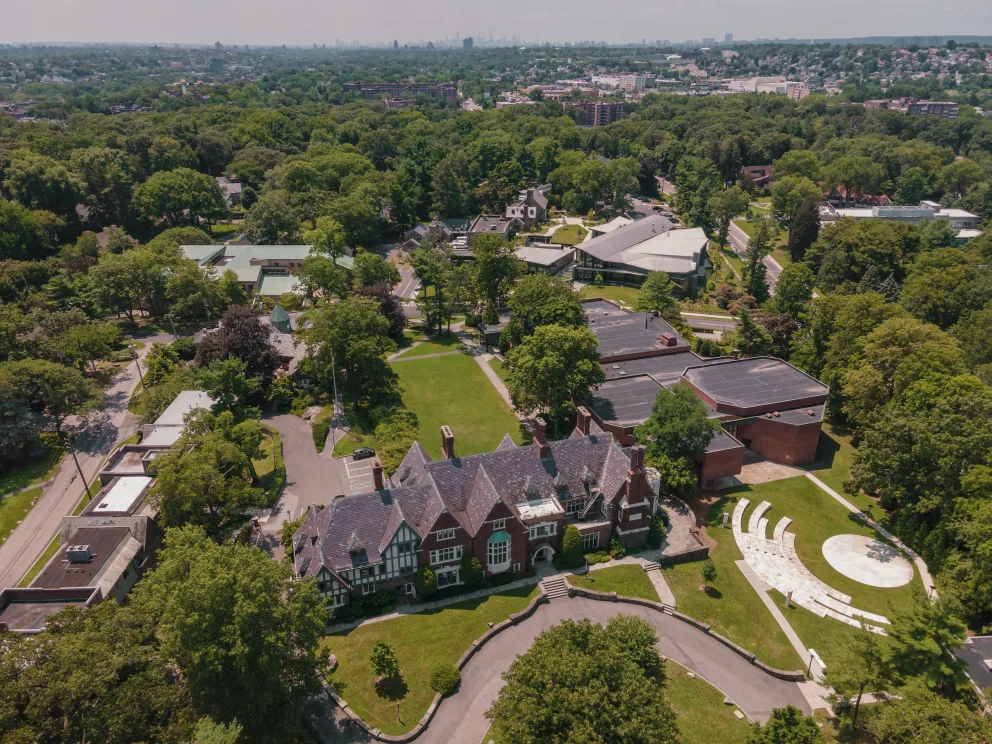
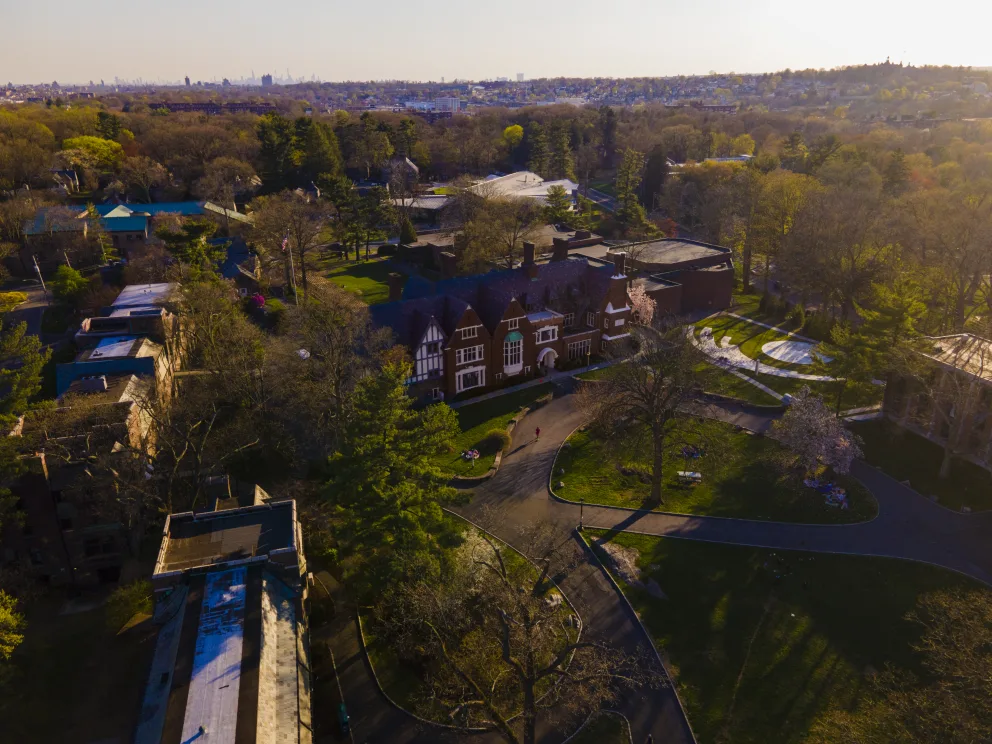
Aerial view of a campus with historic buildings, green lawns, and surrounding trees, with a city skyline visible in the background.
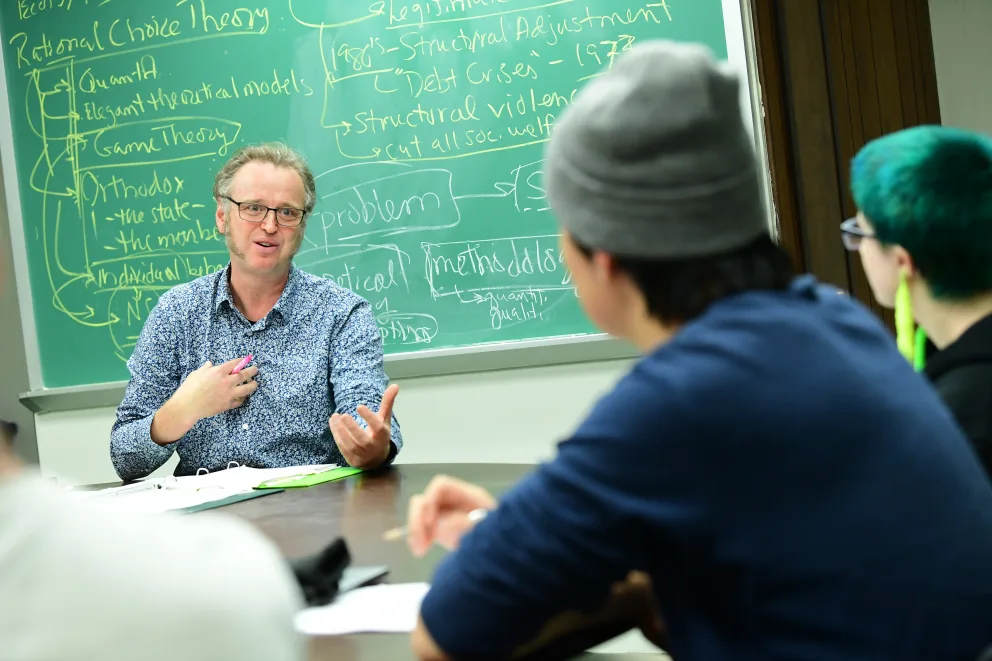
Person gestures while speaking to two others at a table in a classroom. Chalkboard in the background with complex notes.
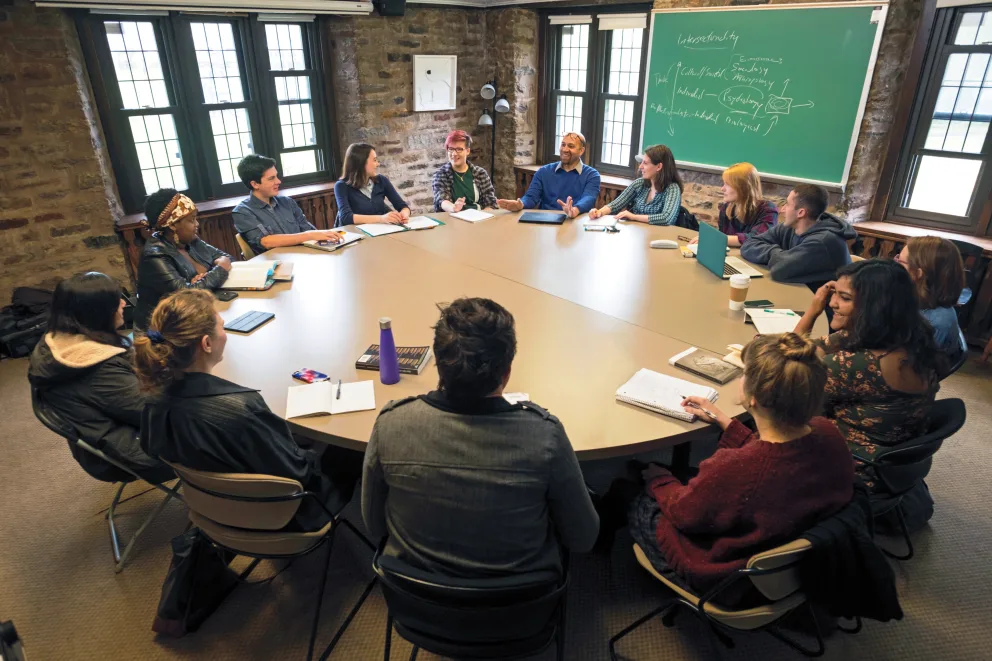
Group of people sitting around a large round table in a classroom, with a chalkboard and windows in the background.
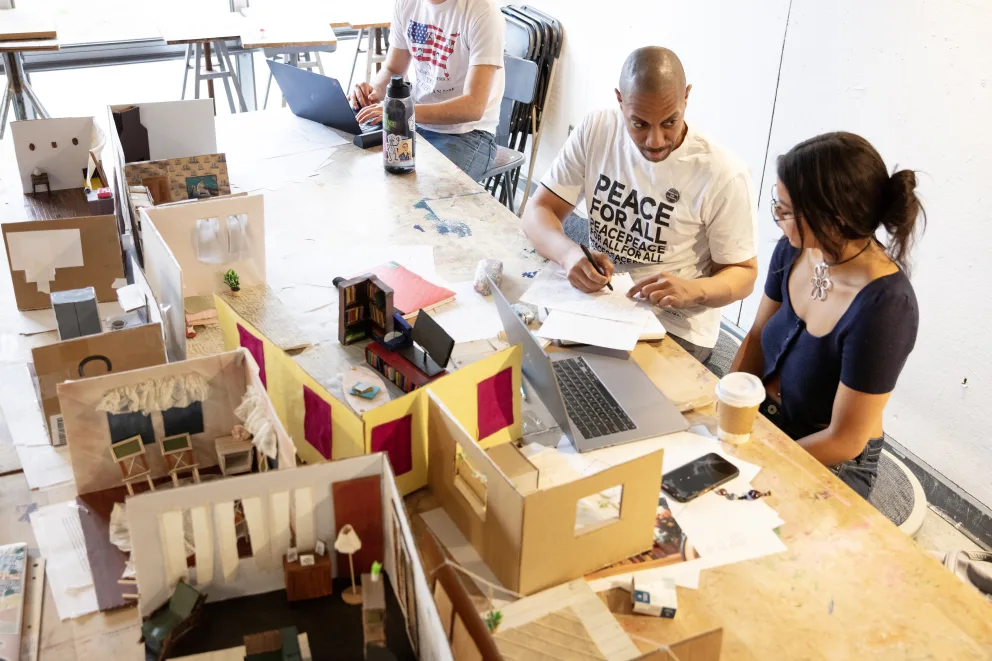
Two people collaborate with models and laptops on a cluttered table, while another person works with a laptop in the background.
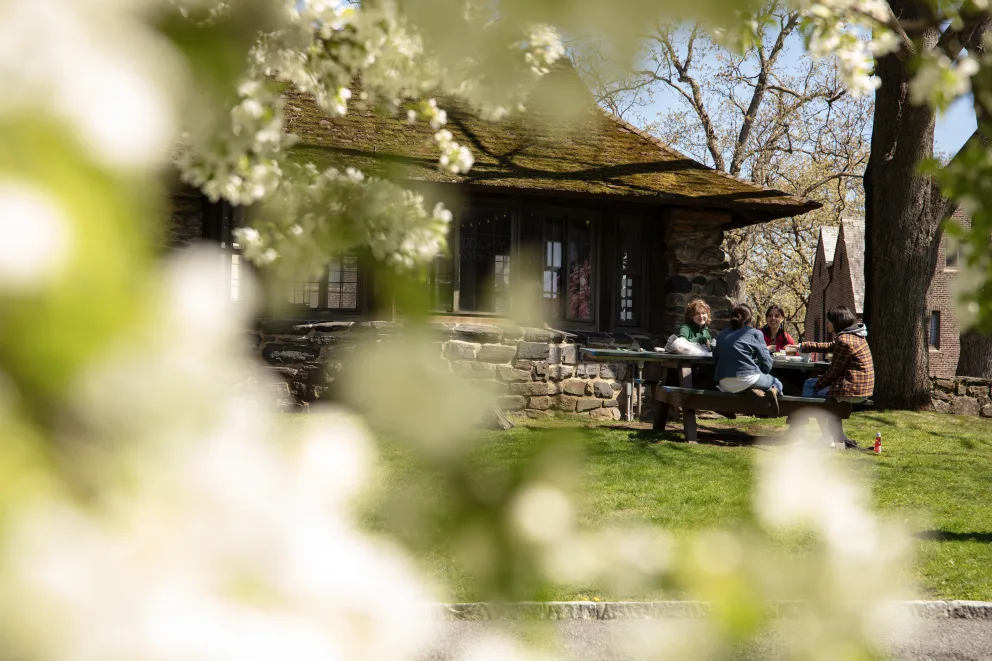
People sitting at a picnic table near a stone building, with blooming branches in the foreground and trees in the background.
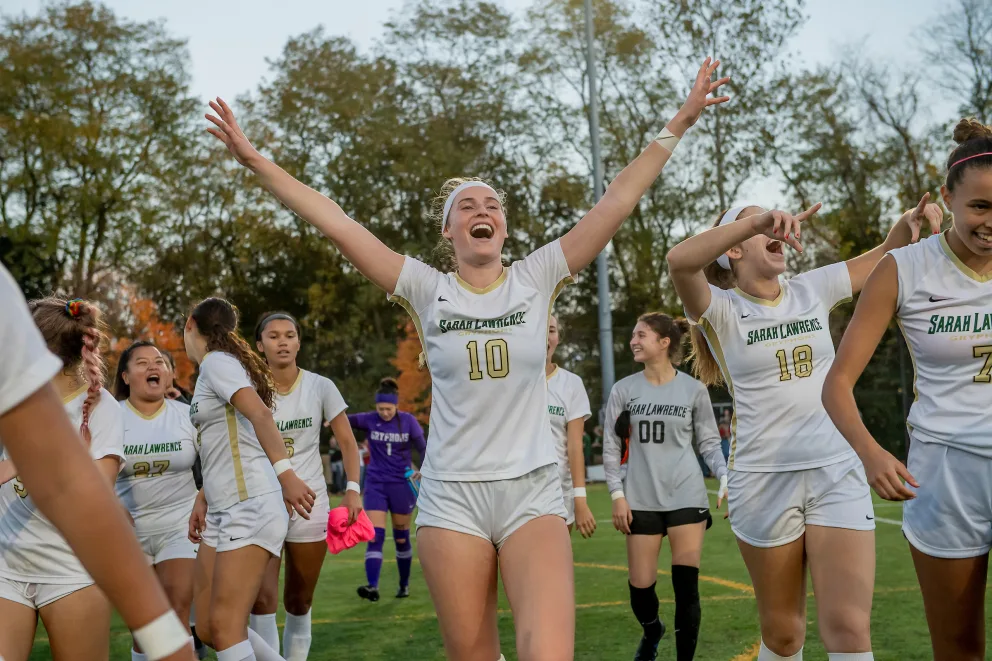
Soccer players in white uniforms celebrate on a field with raised arms and smiles, surrounded by trees.
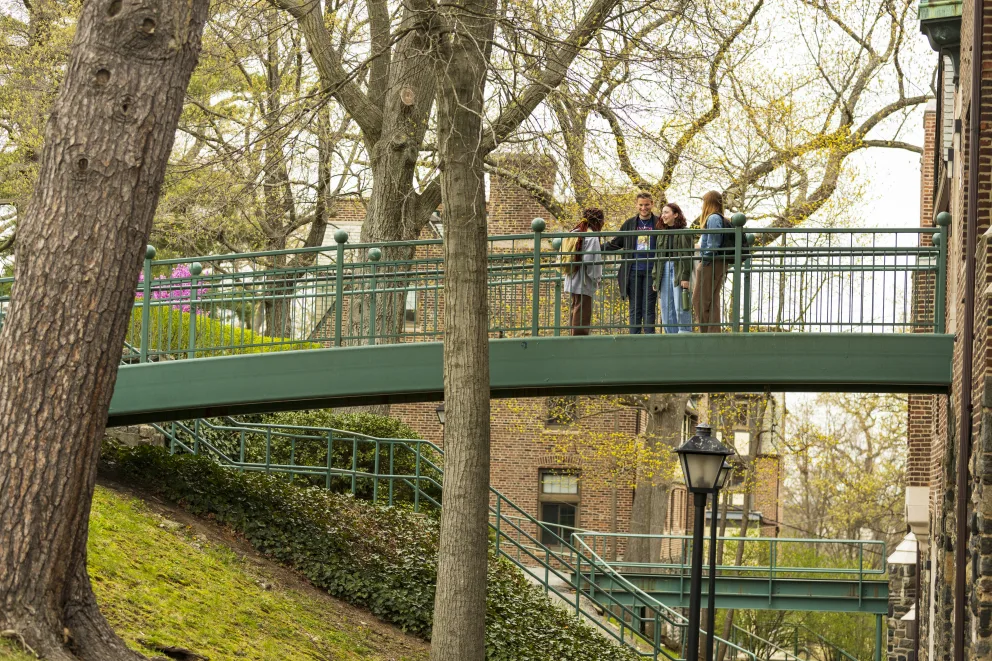
Four people standing on a green bridge surrounded by trees and buildings.
$_item.alt
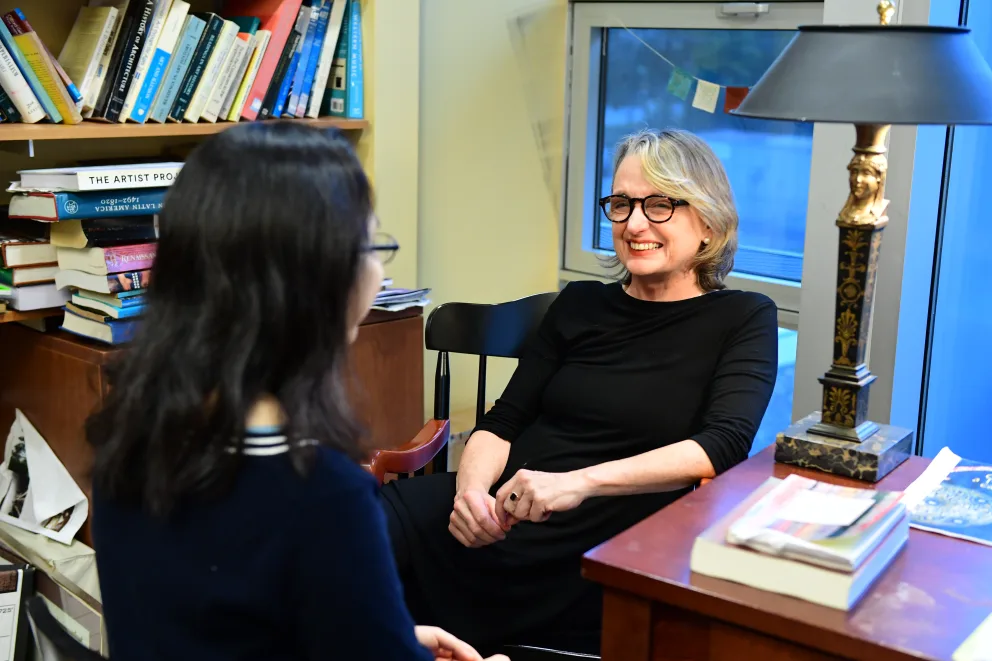
Two people sit in a cozy room filled with books. One faces away, the other smiles and relaxes in a chair by a desk with a lamp.
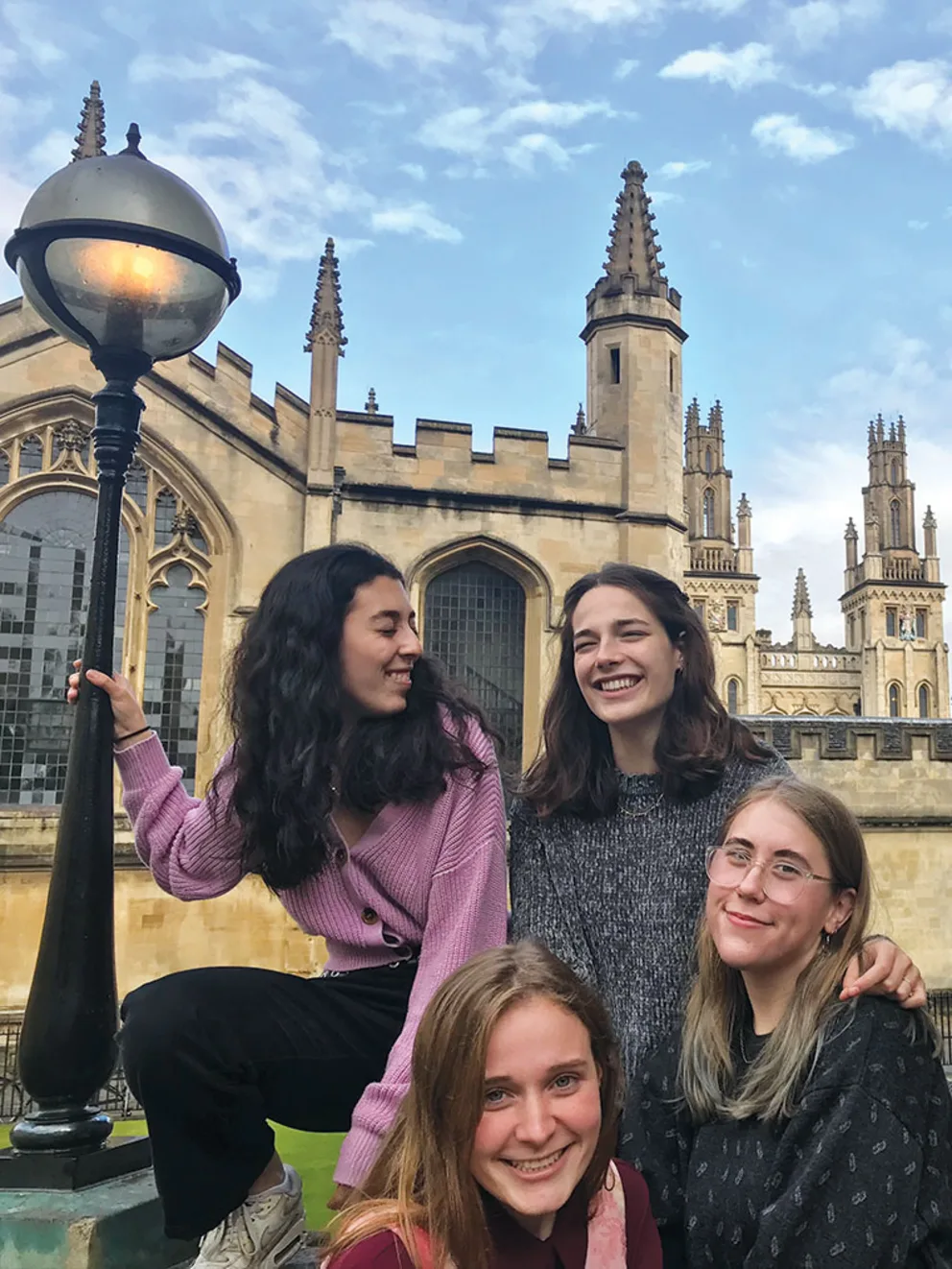
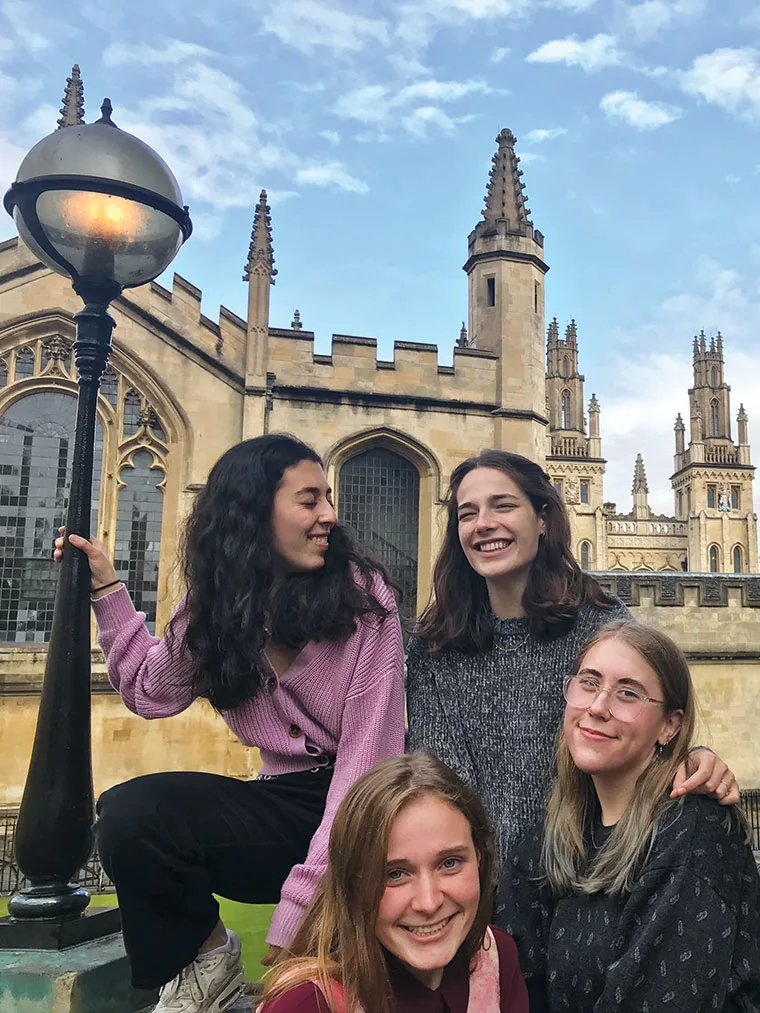
Four people smiling, posing near a historical building with spires, under a bright sky and next to a streetlamp.
Graduates in black gowns and caps smiling outdoors, with one focused in the foreground, others in the background.
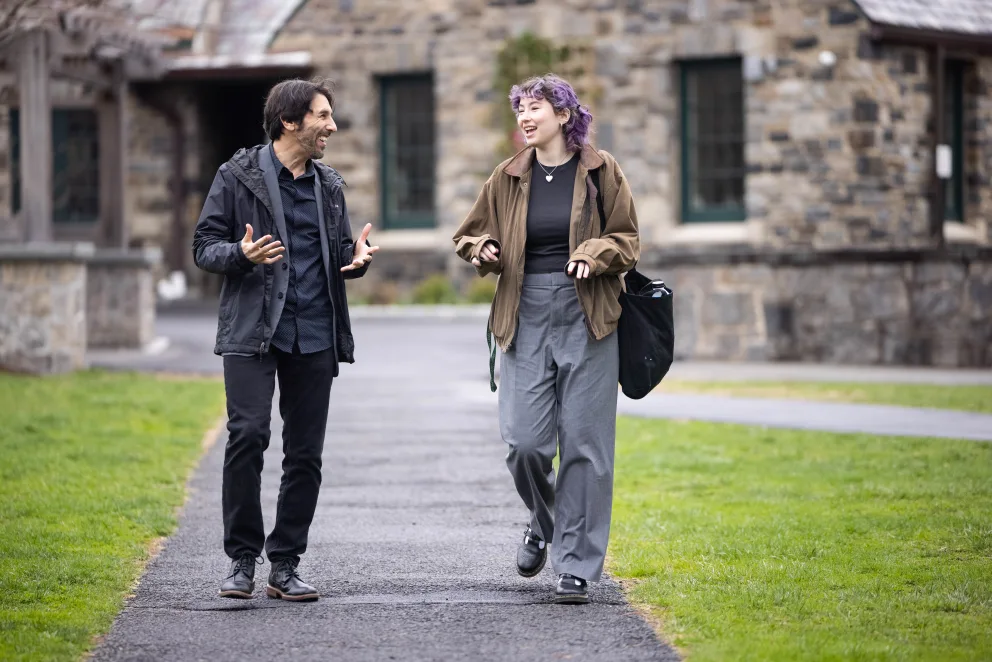
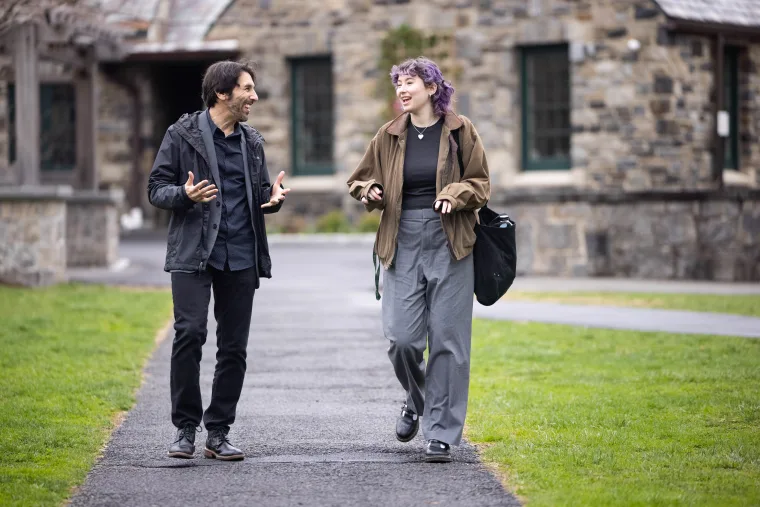
Two people walking on a path, engaged in conversation, with a stone building in the background.
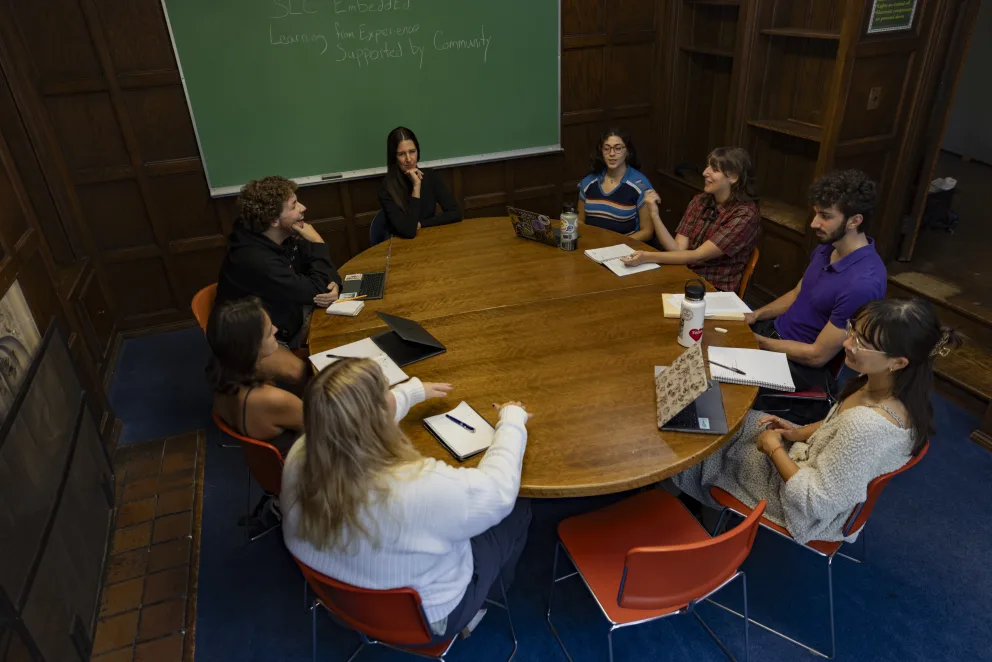
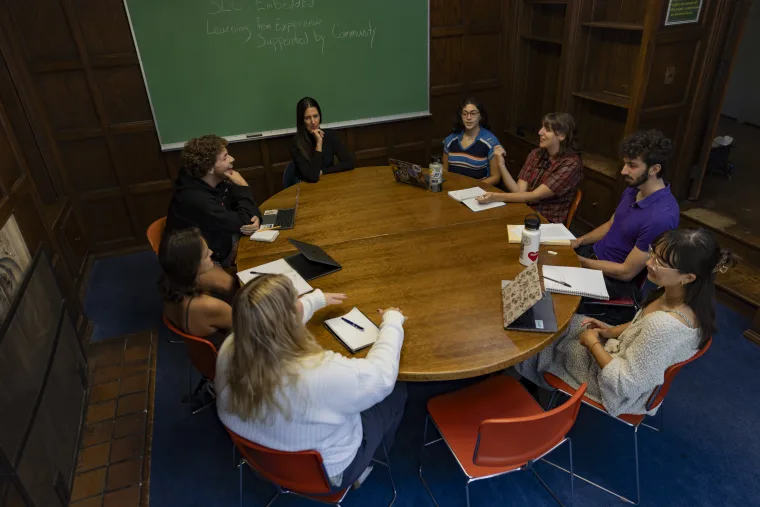
A group of people sits around a circular wooden table in a meeting room with a green chalkboard, taking notes and using laptops.
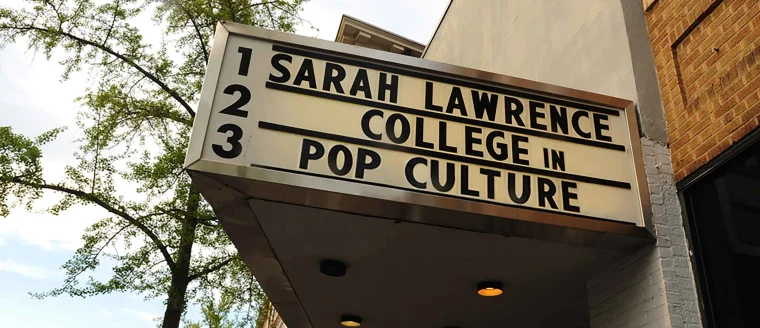
Marquee sign reads "Sarah Lawrence College in Pop Culture" with tree branches visible in the background.
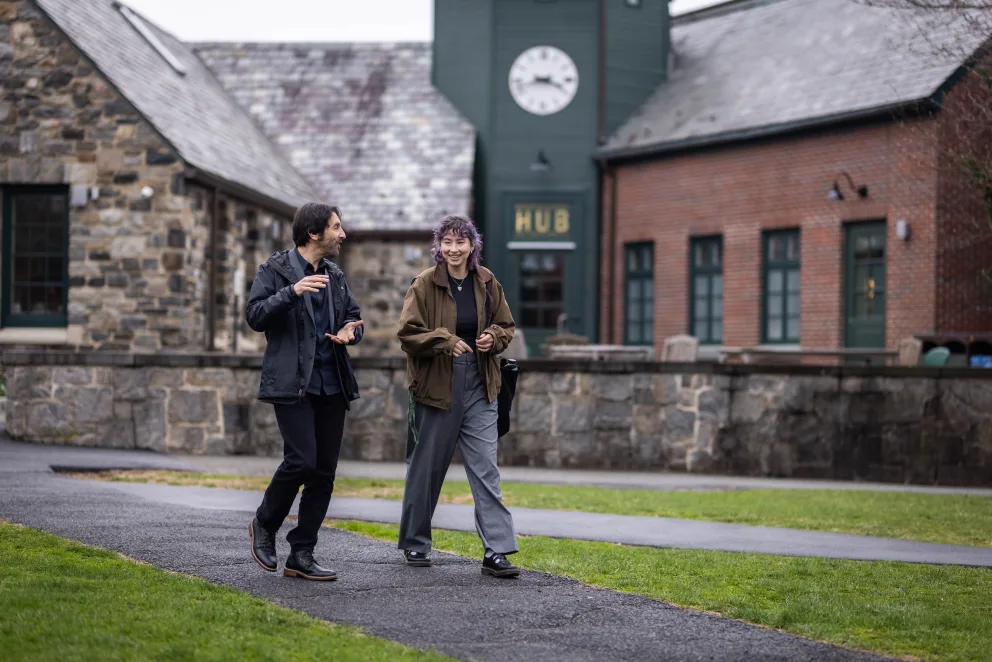
Two people walk and talk on a path in front of stone buildings with a clock tower. One wears a dark jacket; the other, a brown jacket.
Person with dreadlocks and glasses smiling at laptop in a cafe. Coffee and books on table, colorful backpack nearby.
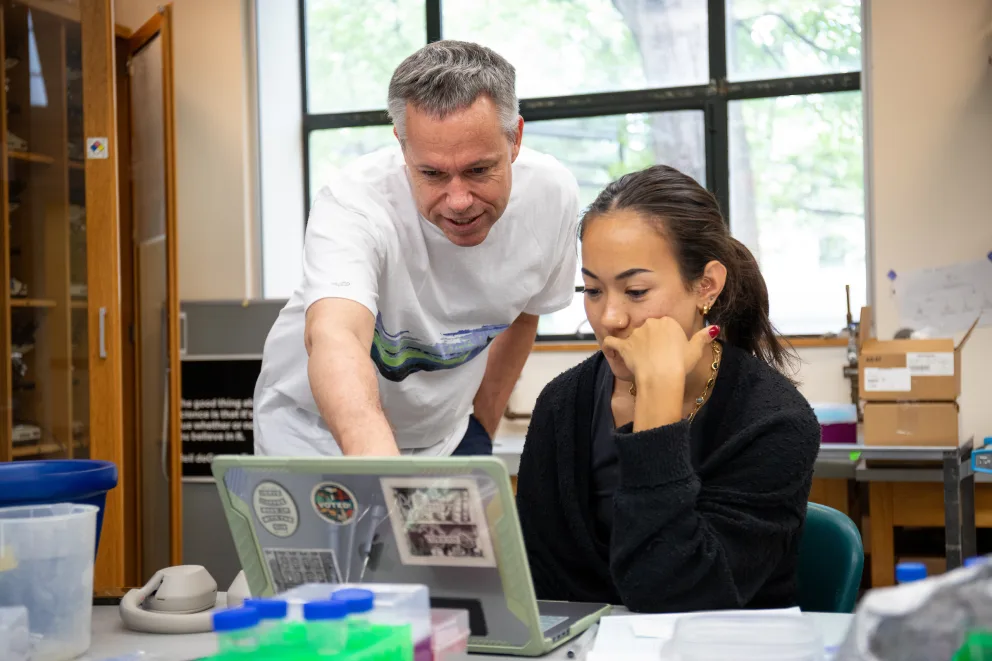
Person pointing at a laptop screen, guiding another person seated and focused on the screen in a lab or classroom setting.
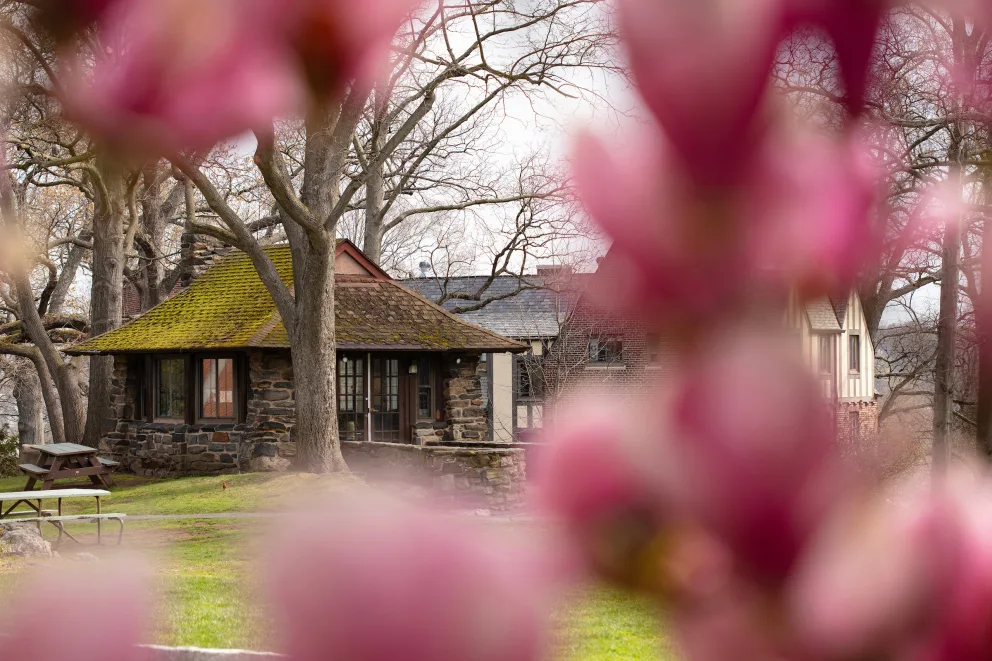
Stone cottage with mossy roof surrounded by trees and blurred pink flowers in foreground. Picnic table on grassy lawn nearby.
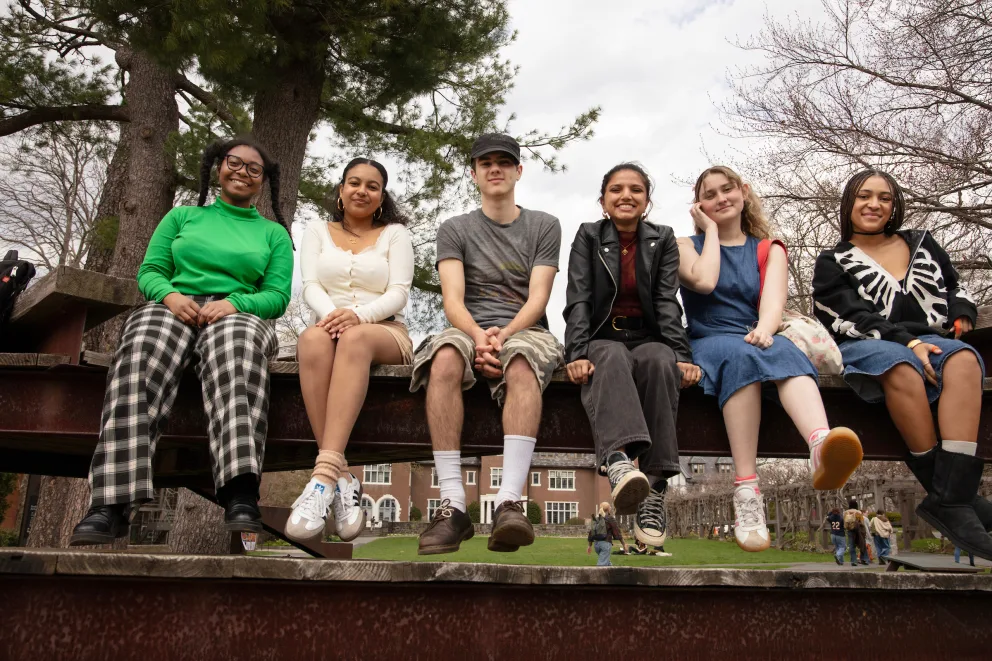
Six people sitting on a railing outdoors, smiling at the camera. Trees and a building are in the background.
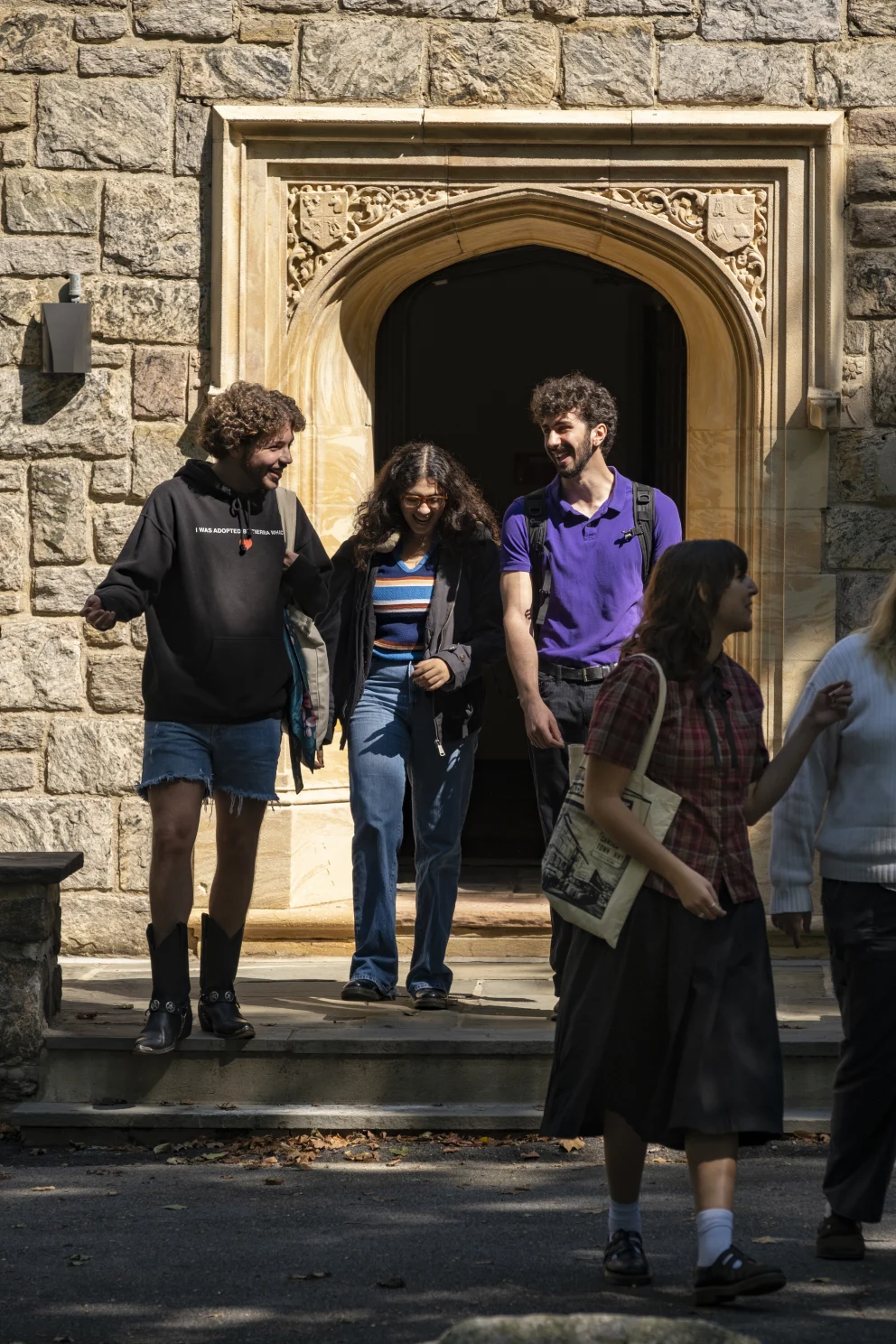
Three people exit a stone building, talking and smiling. Two others walk by in the foreground, with one holding a tote bag.
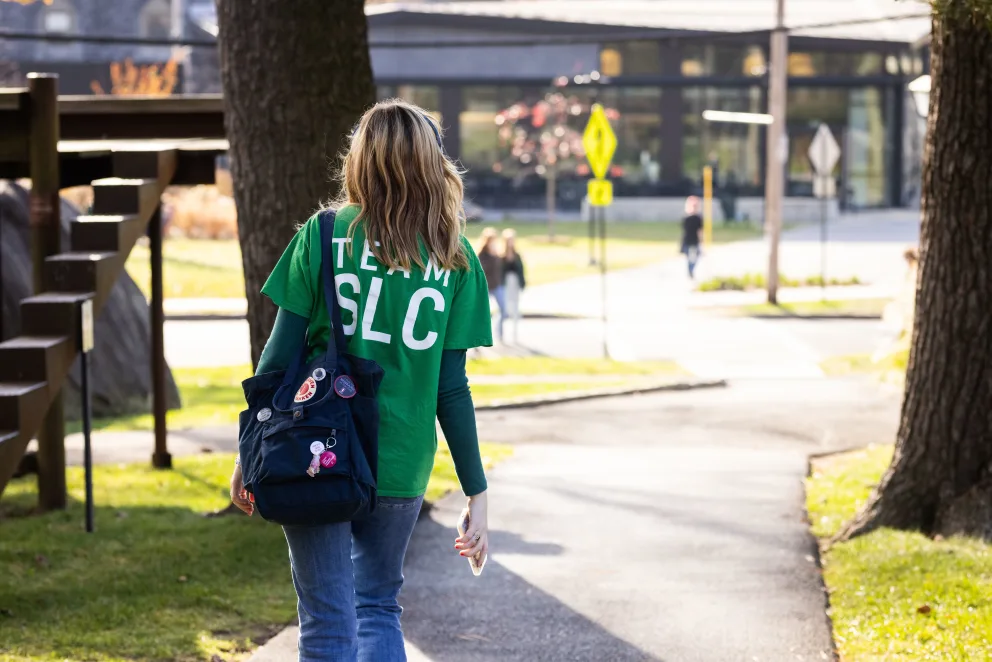
Person in a green "Team SLC" shirt walks on a path with trees and buildings in the background, carrying a decorated bag.
People relaxing outdoors in sunlight, surrounded by greenery. One person smiles in sunglasses, while another looks at a phone.
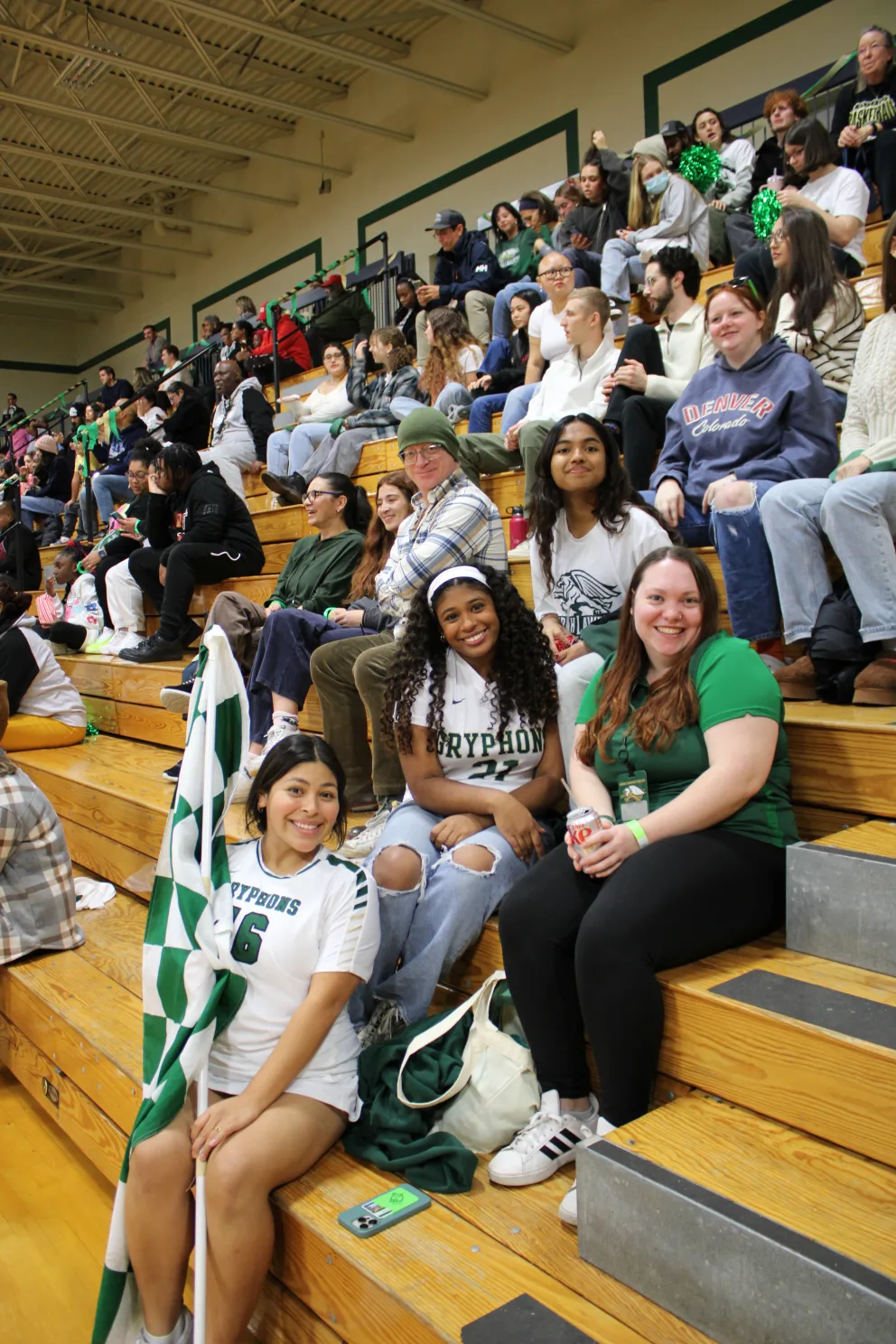
People sitting in bleachers, some smiling and wearing team shirts, with a green and white flag visible in the foreground.
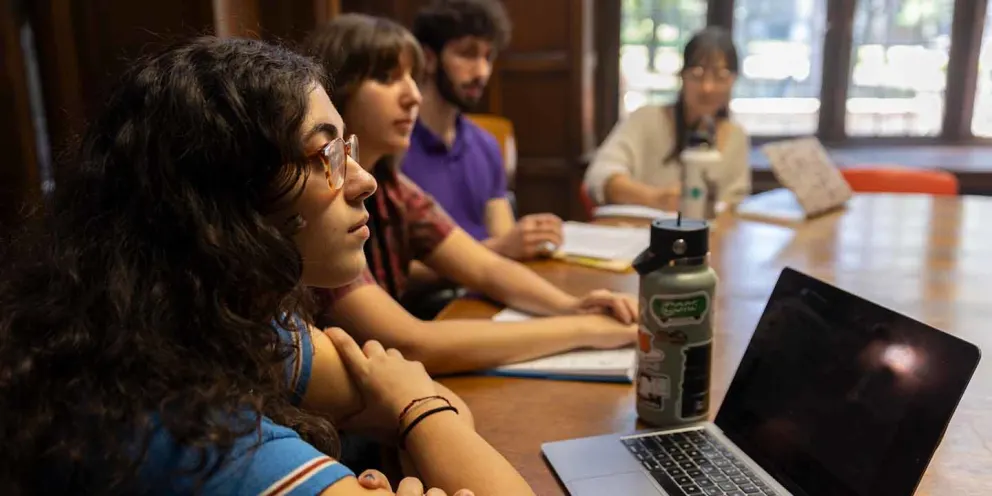
Four people sitting at a table, engaged in discussion, with a laptop and water bottle visible in the foreground.
Person in a purple shirt speaks animatedly at a table, engaging with others. Two people listen attentively, with papers and a water bottle nearby.
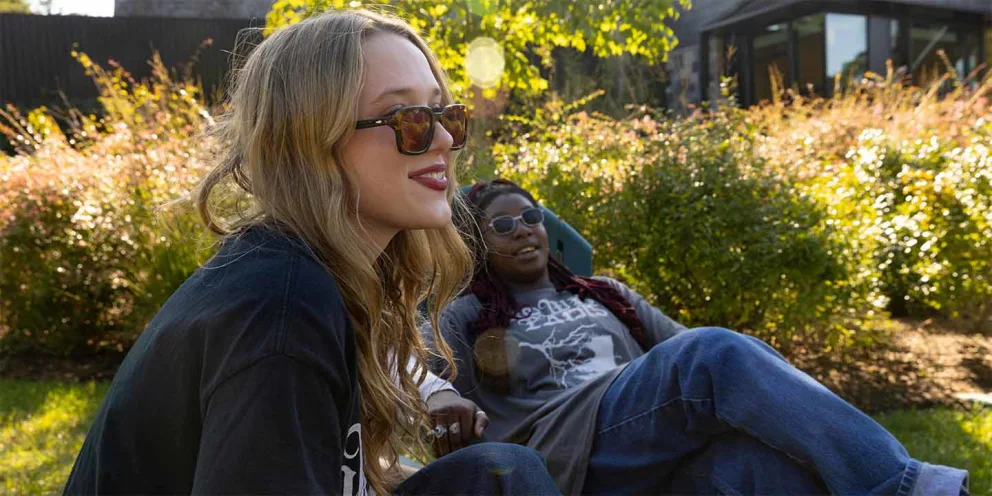
Two people sit on grass, enjoying sunlight. One leans back casually, the other sits upright wearing sunglasses. Bushes and trees in the background.
Person reading a book, seated in a circle of chairs with others on a sunny lawn. Buildings and stairs in the background.
Person in a black dress and beanie, leaning over a table, writing on red paper, surrounded by art supplies and craft materials.
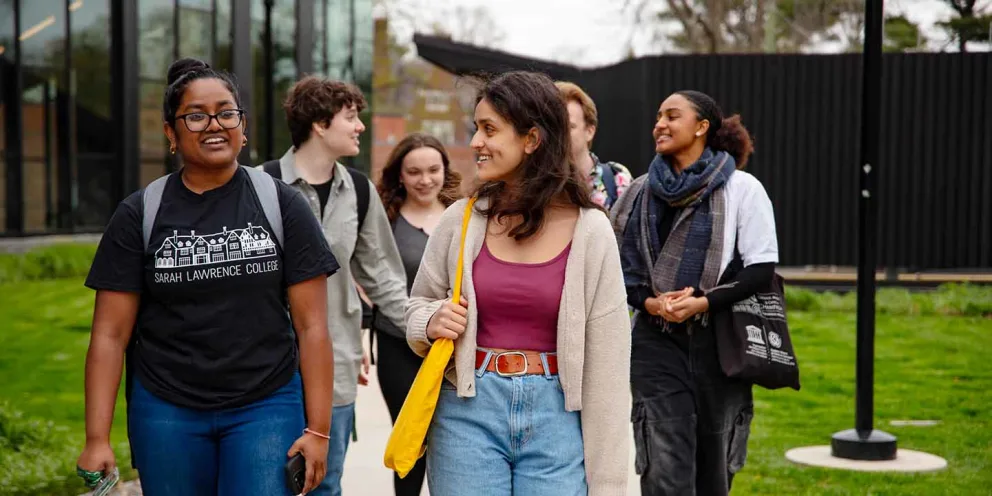
A group of people walking and chatting on a campus path, with one wearing a "Sarah Lawrence College" shirt, near a modern building.
Two people smiling and looking at a laptop screen while sitting at an outdoor table.
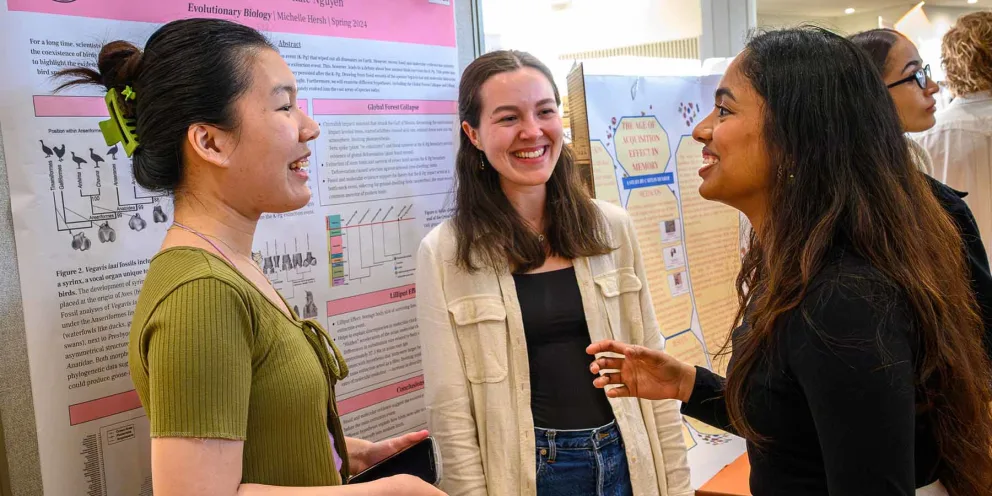
Three people discussing a scientific poster at a presentation. One points to the poster while the others listen attentively.
Three people engaged in conversation in front of science posters at a presentation event.
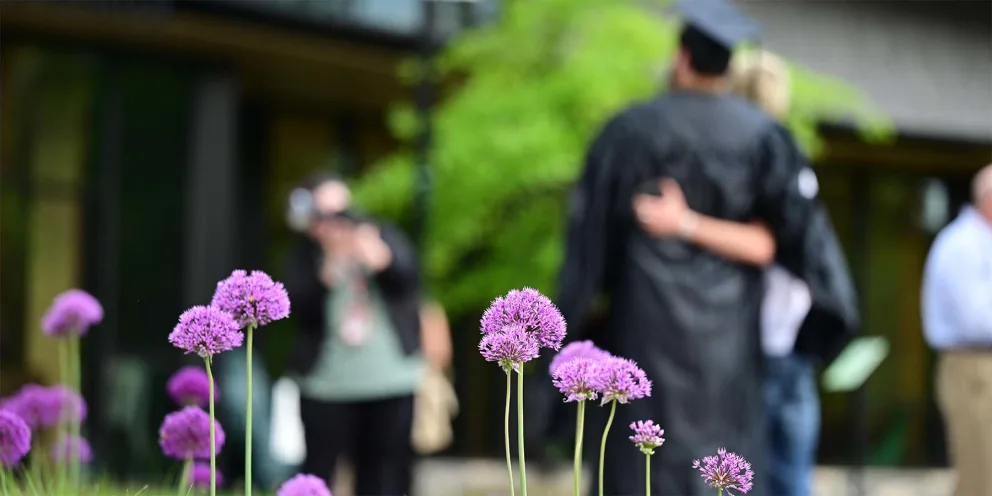
Purple flowers in focus with blurred background of people; one in cap and gown, embracing another in a photo pose.
Aerial view of a large estate with a grand building surrounded by trees and pathways, set in a broad, park-like landscape at sunset.

The Best of Both Worlds

Sarah Lawrence College occupies 44 wooded acres in Yonkers, NY, near the Village of Bronxville, just north of New York City. A 30-minute train ride from the Bronxville station takes students into Midtown Manhattan.

  • In addition to our round-table classrooms, Sarah Lawrence is home to: outstanding theatres, art and performance studios, and music spaces; modern science labs; state-of-the-art graphic computing equipment; an expansive sports center; an inspiring visual arts center; and student-centered spaces such as The Barbara Walters Campus Center, The HUB, and, opening this year, a brand new center for experiential learning.

  • The Sarah Lawrence campus is situated in southern Westchester County, New York, on the eastern edge of the city of Yonkers and adjacent to the Bronxville village center. The communities of Bronxville, Yonkers, and others in the Hudson Valley offer students a myriad of cultural opportunities, shopping, dining, and entertainment options.

  • New York City is a natural extension of the Sarah Lawrence campus—a cultural, research, social, and career resource without peer. Students enjoy easy access via two walkable train stations as they head into the city for an internship, audition, or just a night out.

Student Body

Our students share an enthusiasm for intellectual rigor, creativity, and interdisciplinary work.

We are committed to having our student body, faculty, and administration reflect the social, racial, and economic diversity that characterizes our society. Our stdents come from all 50 states and more than 50 countries. The states most represented in the student body are California, Massachusetts, New Jersey, and New York.

  • 1,490

    Undergraduate students

  • 225

    Graduate students

  • 1,715

    Total students

  • 30%

    Students of color

  • 6%

    International students, representing 50 countries

  • 50

    Number of states represented

  • 20%

    Students of color

  • 11%

    International students

  • 73%

    Between the ages of 22-29

2025-2026 academic year

Three people exit a stone building, talking and smiling. Two others walk by in the foreground, with one holding a tote bag.
A group of people walking and chatting on a campus path, with one wearing a "Sarah Lawrence College" shirt, near a modern building.
Two people walking on a path, engaged in conversation, with a stone building in the background.

Faculty Interaction

At Sarah Lawrence, students spend more time one-on-one with award-winning faculty than do students at any other college in the country.

Meet the faculty

Graduates in black gowns and caps smiling outdoors, with one focused in the foreground, others in the background.

Graduate Programs

The College offers distinctive master's degree programs—several of which have defined their fields—that delve deeply into three rigorous areas of creative, societal, and pedagogical inquiry and mastery: the arts; health sciences and society; and children, childhood, and education.

Learn more about Graduate Studies

Four people smiling, posing near a historical building with spires, under a bright sky and next to a streetlamp.

Study Away & Exchange Programs

Sarah Lawrence offers outstanding international experiences as well as opportunities to spend a semester or year with select exchange partners. Students may also elect to study at other accredited four year institutions throughout the United States.

Global education programs

A group of people sits around a circular wooden table in a meeting room with a green chalkboard, taking notes and using laptops.

Academic Approach

With small seminars, an 11:1 student-to-faculty ratio, and close, collaborative work with faculty, learning at Sarah Lawrence is personal.

Academic approach

The Sarah Lawrence College Endowment

Sarah Lawrence College’s endowment, established in 1926 with a gift from William Van Duzer Lawrence, is made possible by a history of generous philanthropic support. Endowed gifts help ensure the College’s future by providing a stable source of income in perpetuity. Learn more about the endowment and see answers to frequently asked questions.

As Seen on TV

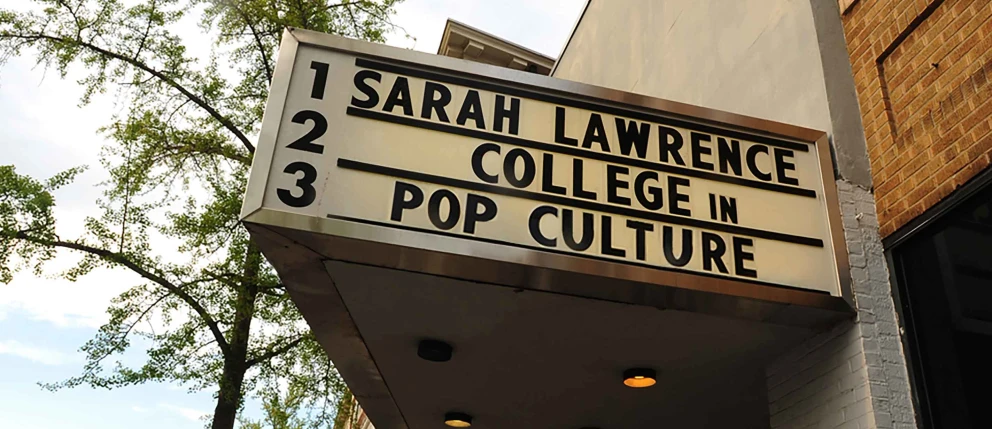
Sarah Lawrence College pops up again and again in the stories we watch and read — from movies like 10 Things I Hate About You to TV series, novels, and even Jeopardy!

Marquee sign reads "Sarah Lawrence College in Pop Culture" with tree branches visible in the background.

Academic Freedom

Helping students to think and act independently is at the core of the College's mission, and Sarah Lawrence has a proud history of commitment to the principles of academic freedom and responsibility. On May 9, 2026, the Board of Trustees adopted a Statement on Academic Freedom developed by the Faculty Committee on Academic Freedom and endorsed by the faculty.

  • Sarah Lawrence College has a proud history of commitment to the principles of academic freedom and responsibility. In the statement proposed by the Board of Trustees and adopted by the faculty in 1938, the Board of Trustees wrote:

    "The Board of Trustees recognizes that the wholesome functioning of an educational institution depends on freedom of thought and speech. It pledges itself to maintain and protect the right of the teacher to deal candidly with the controversial questions that may arise in the course of his relations with students but it expects the teacher to distinguish such candor from indoctrination. It expects the teacher to develop the art of forming independent opinions in the student and to give a fair emphasis to opinions contrary to his own."

    After the College came under attack in the fall of 1951 for “harboring subversives,” the Board of Trustees issued a statement in January 1952 reaffirming the College’s commitment to academic freedom:

    "An educational institution must teach its students to think for themselves by giving them the knowledge on which to base judgments. The teaching faculty of Sarah Lawrence College is responsible for the development in students of intellectual independence and maturity. In carrying out this responsibility faculty members are expected to deal candidly and honestly with controversial questions. Teachers who meet the test of candor, honesty, and scholarly integrity may not be deprived of any rights they hold as citizens of this country, including the right to belong to any legal political organization of their own choosing.

    It is a principle accepted by the Faculty, the President and Trustees alike that there is to be no indoctrination of students with a political, philosophical or religious dogma. No person, therefore, who takes his intellectual orders from an outside authority, whether communist or any other, could be given or could retain the responsibility of membership in the Sarah Lawrence faculty."

    In a January 15, 1952 letter to the Students, Faculty and Alumnae Council, then President Harold Taylor and Chairperson of the Board of Trustees Harrison Tweed added the following:

    "It is an essential part of good educational policy that a college ask for no orthodoxy in its teachers as to religion, politics, or philosophical theory. If it were otherwise, teaching would be done not by the faculty but by the governing board of the institution. The teacher would be a mouthpiece for the preconceived philosophy of the institution rather than a seeker of truth about problems in his field of learning."

    In the conclusion of the same letter, President Taylor and Chairperson Tweed wrote:

    "As anyone who has attended Sarah Lawrence College already knows, the idea that a member of the faculty should take intellectual or political dictation from any quarter is alien to everything Sarah Lawrence stands for. Prejudiced or politically inspired teaching would quickly reveal itself, and would be rejected by the students and by the whole College."

    The support of President Taylor and the Board of Trustees for the faculty of the College never wavered, even as eighteen current and former faculty members were accused of being Communists or were brought before the Jenner Senate Subcommittee investigating subversive activities. In April 1952 the American Civil Liberties Union (ACLU) gave President Taylor an award for his “powerful effort on behalf of academic freedom.”

    Helping students to think and act independently is at the core of the mission of Sarah Lawrence College. It is a goal that requires robust protections of academic freedom. The College must be a place where both faculty and students feel free to explore and debate ideas and theories, freed from the constraints of mandated ideologies, beliefs, and practices. This process may produce discomfort for those whose cherished beliefs are challenged. But such challenges, and the ensuing respectful dialogues, are at the core of the academic mission.

    In the classroom, students must have the freedom to learn and to express their full range of opinions on social and political questions, without fear of reprisal from the institution or from authorities outside the College community. Our classrooms must be spaces where faculty and students feel free to speak their minds, in pursuit of free intellectual exploration and discovery. Students have the right to express diverse and contradictory opinions about the material presented in the class, but this right comes with the obligation to engage with and learn the material presented by the professor and for meeting academic standards imposed by the professor as well as the College. In turn, the professor has the right to determine which material will be covered in the course, how class time is used, and to develop and enforce academic standards, but this right comes with the responsibility to respect differing opinions presented by their students, and not to grade students differently based on differing opinions. Professors also have the responsibility to respect the privacy of students in the classroom, and not to disclose student opinions outside without explicit student permission. All of this ensures that the classroom remains the space of discursive freedom that is necessary for free intellectual inquiry.

    The academic freedom of faculty members includes the freedom to express their views on academic materials and discussions in the classroom and in the conduct of research and on matters having to do with their institution and its policies, subject to the satisfactory performance of other academic duties and compliance with College policies, applicable laws, and academic and professional ethics. Academic freedom provides the right to do so even if their views are in conflict with one or another received wisdom. Further, faculty should not be impeded from teaching or researching particular subjects because of the preference and interests of the institution, its donors, political figures or other entities.

    The kind of broad liberal education exemplified by Sarah Lawrence College faculty requires developing critical ability in one’s students and an understanding of the methods for resolving disputes within the discipline; good research requires permitting the expression of contrary views in order that the evidence for and against a hypothesis can be weighed responsibly. In the case of institutional matters, grounds for thinking an institutional policy desirable or undesirable must be heard and assessed if the community is to have confidence that its policies are appropriate.

    In the case of issues of public interest generally, the faculty member must be free to exercise the rights accorded to all citizens and members of the public free from institutional censorship or discipline. However, faculty must be clear, when expressing such opinions, that they are doing so in their capacities as private citizens and not speaking on behalf of the institution.

    Faculty are urged to bring concerns about academic freedom to the Committee on Academic Freedom — a committee of peer faculty members — before making a formal complaint.

    The College has affirmed, and continues to affirm, the tenets of academic freedom articulated in the 1940 Statement of Principles on Academic Freedom and Tenure with 1970 Interpretive Comment of the American Association of University Professors (AAUP).
Where to Next?

Get to know Sarah Lawrence College better

© Sarah Lawrence College. All rights reserved.