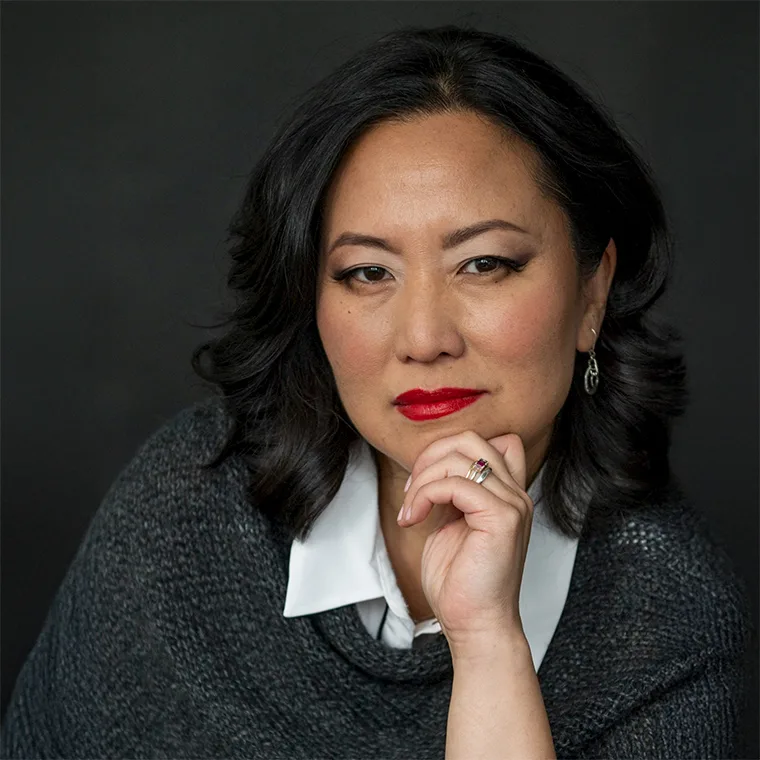
Kim Ferguson
-
Background
Education
BA, Knox College: Developmental Psychobiology. MA, PhD, Cornell University (Human Development/Developmental Psychology & Africana Studies).Deanship at Sarah Lawrence College
Kim became a member of SLC’s Psychology faculty in 2007. She joined the Child Development and Art of Teaching graduate faculty in 2011, and became Dean of Graduate & Professional Studies in 2018.Global Studies
Kim developed and ran a Sarah Lawrence College Global Studies Program in Tanzania, Malawi, and Zimbabwe for several years, and continues to maintain collaborative relationships with community and civic partners in the region.Teaching
Kim currently teaches in the Art of Teaching and Child Development programs. She also continues to teach advanced undergraduate courses in psychology, primarily focused on research methods and ethics and professional development. She also coordinates the Summer Psychology Research and Internship Program. She is a member of the Child Development Institute advisory group.Current work
Kim runs the Sarah Lawrence College Infant Development and Environmental Analysis (IDEA) Lab. Her current work focuses on children’s outdoor play, including Community Adventure Play Experiences and a four-year longitudinal community-based participatory project focused on redesigning the outdoor play spaces at our Early Childhood Center.Interests
Kim’s special interests include sustainable, community-based participatory action research, cultural-ecological approaches to infant and child development, children at risk (children in poverty, HIV/AIDS orphans, children in institutionalized care), community play spaces, development in Southern and Eastern African contexts, and the impacts of the physical environment on children’s health and wellbeing.Areas of Academic Specialization
Kim’s areas of academic specialization include southern African and North American infants’ language learning, categorization, and face processing, the physical environment and global children’s health and wellbeing, community adventure play experiences, adolescents’ remote acculturation in southern African contexts, and relationships between the quality of southern African orphan care contexts and child development and health.Kim Answers Your Questions
Excerpted from SLC podcast. https://drive.google.com/file/d/1sqOVcdMOiGtRTn7j-yLmLkt5lUKCwPkH/view
What does the Dean of Graduate & Professional Studies do?
That’s a good question. I think I would have given you a very different answer each year I have been in the position. On a day-to-day basis, I am responsible for the smooth running of all of our graduate programs. I am responsible for the curriculum and the faculty and also for our staff and all of our students. What this means is that I do spend a lot of time with our program directors who are primarily working directly with students, supporting their needs, hiring faculty, supporting their faculty and staff. So I work closely with them but I also have a team within Graduate Studies where we address broad issues for graduate students, student life, student work. Reporting to me, we have an Associate Dean of Graduate Students who has a student affairs background and works directly with individual students and oversees our Graduate Student Association and we have a Director of Administration who keeps all of the trains running. We work with many of the offices on campus who offer student support and student services. For example, right now we are working on course registration, so we are coordinating with the Finance Office, the Registrar’s Office, Student Accounts, [and] Financial Aid so that we know all of our students’ statuses and that we register and bill them correctly. And we are working on budgeting for the next fiscal year. This entails working with all of the program directors, the Finance Office and other areas of campus. We talk conceptually, setting priorities and planning how we can offer the best program and support our students. Year round, we work on recruitment and admission, working with the Admission Office to set up systems for admissions for each of our programs and manage the admission process, [and] coordinate information sessions and communications. It’s a very busy administrative job, lots of spreadsheets, lots of meetings, lots of technical aspects that I really enjoy. I am trained as a research scientist, so I enjoy working with data and systems, but it is also a lot of working with people and ensuring that we are all working together effectively, which I also enjoy.Among your interests you say that you are interested in the “cultural-ecological approaches to infant and child development”, what does that mean?
Yes, when I have some time I still do some reading and writing and work on some theory and research. I actually still have a research lab on campus where I am involved with some ongoing work. We are doing some research on play at the moment. I’m working with the Early Childhood Center and the Child Development Institute on a redesign of the play spaces. So I do have an active research lab and research students. What I am most interested in is how we best understand the factors that influence human well being, human functioning, human development and health. I became very interested in working with infants. I spent a lot of time working with infants in Malawi during the AIDS pandemic. At that time a large number of infants were spending time outside of their families because the adult population was being decimated by HIV/AIDS in the 1980s and 1990s, so we had these emergency infant homes that were trying to hold infants and support them to enhance their development. I got involved directly offering one-on-one support, basic care, and play. I became very interested in play but also well-being and health and how all of these [are] integrated. So I am really interested in these issues from a personal standpoint. In my undergraduate work I became very interested in infancy from the perspective that this is really your early environment, your first time operating in the world, your first experiences, and as a cognitive psychologist, I was interested in time zero, before culture. In my graduate work, I learned that infant development is really immersed in their cultural environment, their physical and social environment from conception and even from pre-conception. I am particularly interested in trying to understand how we look at the interplay of different factors that influence functioning and development.Am I correct in thinking that infant and child development is not the same thing or should not be confused with raising children?
Yes, I think some people think that I must know exactly what I am doing in raising my own children since this is my area of study, but the way in which children develop involves multiple factors, multiple influences over time and it is a very different area of work to study parenting and parenting practices. But, I am very interested in the study of family systems and have written most recently and done some work with some folks at Penn State in thinking about how we understand the family context as part of the whole context of the child’s environment. Often family studies gets quite separated from studying basic infant and child development. And I think it is very hard to understand a child as an individual outside of their family and structural and cultural context.Watch, Read, Listen
Empathy, Education, and the Future of Learning | Kim Ferguson | TEDxEastchester School District - March 2026
How empathetic education will create a new world of learners across the globe. Dr. Kim Ferguson is a developmental and cultural psychologist whose work explores how children grow, learn, and thrive across diverse global contexts. As Dean of Graduate and Professional Studies at Sarah Lawrence College, she integrates research, social justice, and community partnerships to advance holistic approaches to education and wellbeing. Her research spans child development, sustainability, and the role of the physical environment in shaping human potential—connecting the local and the global in powerful, human-centered ways. This talk was given at a TEDx event using the TED conference format but independently organized by a local community. Watch here.Thomas H. Wright Lecture Series - Play Embraced
In this November 8, 2025 panel, conference presenters - Jerusha Beckerman, Lorayne Carbon, Emily Cullen-Dunn, Kim Ferguson, Yoni Kallai, and Cindy Parson Puccio - discuss the importance of play. Watch here."How remote working could be changing children’s futures"
In this February 24, 2025 BBC article, Kim Ferguson, Dean of Graduate & Professional Studies, and Tricia Hanley MS Ed '08 MA '13, Director of the Child Development Institute, shared expert advice on how parents can navigate working from home and the influence it may have on children. Read it here.Working 1:1 - Alex Peters '11 and Kim Ferguson, psychology faculty member at Sarah Lawrence College
Alex Peters '11 and her don, Kim Ferguson (psychology), discuss their child development research at the Early Childhood Center and in the local community. Watch here.